Now, more than ever, we’re rooting for grantees & partners working tirelessly to protect, care for, & understand our planet.
Learn more about the recent accomplishments and exciting work of a few of our grantees
From Chicago-based sustainability solutions, youth programs that explore urban agriculture, green careers, environmental justice, and food sovereignty to scientists around the world studying Earth’s climate, we are committed to protecting our planet and empowering communities to preserve their environmental futures.
Ensuring Safe Water for the Future
The Freshwater Lab at the University of Illinois Chicago envisions a world where there is no more single-use water. “Our current system relates to water in single-use terms, meaning that we only use it once. Such ways of relating to water are flawed because all the water that moves through the earth already exists. The Freshwater Lab’s vision is for the Illinois coastline to produce the world’s best water for multiple uses. Reliable, safe supplies of water for both industrial and domestic uses will attract new enterprises and people to the region as a whole.” The Freshwater Lab will host Recycling Water for Data Centers and Quantum Computing on Friday, May 8 as part of Chicago’s 6th Annual Water Week.

As all of the water on earth already exists, it is incumbent on society to rethink single-use water.
Congratulations to 2026 Guggenheim Fellow Michael Kaplan
The Kayden Guggenheim Fellowship in Climate Studies has been awarded to Comer Fellow Michael Kaplan. a Research Professor at Lamont-Doherty Earth Observatory of Columbia University, studies how mountain glaciers, ice sheets, climates, and landscapes changed in the past. In addition, his research includes topics in geomorphology, cosmogenic surface exposure dating and geochronology, and paleo-dust. He also runs a summer intern program for undergraduate research at Lamont. The Guggenheim Fellowship, in particular, will focus on past glaciers and climates in South America and elsewhere.
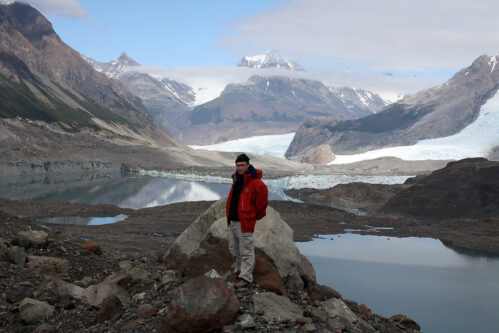
Kaplan in the field, near Brazo Sur and the front of the Southern Patagonian Icefield, Patagonia.
Youth-Led Food Sovereignty
Gary Comer Youth Center is opening a new Food Sovereignty Hub which will bring a 4-season greenhouse, FarmBox hydroponic farm, outdoor classroom and new farmer's market space to the 1.75 acre Comer Crops Youth Farm. A groundbreaking ceremony will take place as part of the 2nd Annual Harvest Dinner on Thursday, September 24. The Harvest Dinner celebrates the accomplishments of the Urban Farmer and Culinary Arts Apprentices in GCYC's food systems programs. Find out more about Harvest Dinner tickets and event sponsorship.
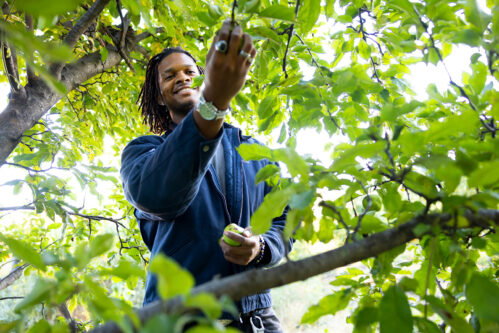
Comer Crops Youth Farm is also home to a fruit orchard. Photo by Jasmin Shah.
Inspiring The Next Generation Of Scientists
Each summer, researchers from around the world gather in Abisko, Sweden, 20 miles north of the Arctic Circle, for the Advanced Climate Dynamics Course (ACDC). “Climate is a discipline that requires you to know and bring materials from all sorts of disciplinary sciences: physics, chemistry, math, biology, ecology,” said Comer Fellow David Battisti, professor of atmospheric sciences at the University of Washington and one of the organizers for ACDC. “If we’re going to make progress, we need to bring those groups together.” Read about the scientists working to solve the problems of tomorrow.

Scientists on the Kungsleden hiking trail in Abisko, Sweden. Photo by Marysa Laguë.
Climate Justice Now
Climate change is not only an environmental crisis but also a catalyst for worsening socioeconomic inequalities, leading to widespread calls for “climate justice.” Comer Fellow Joerg Schaefer contributed to and co-edited Climate Justice Now: Crossing Disciplines to Combat Our Planetary Crisis, a multidisciplinary book that explores “climate justice across the natural sciences, social sciences, and humanities. Synthesizing these divergent approaches, it develops a new conceptual framework that transcends disciplinary divides, providing a deeper and richer understanding of climate justice. Contributors make an urgent case that climate justice must be centered within and across disciplines, creating a roadmap for multidisciplinary research and pedagogy on the climate crisis. Featuring a wide range of voices and actionable recommendations, this timely book illuminates how scholarship on climate change can become a call to action.”
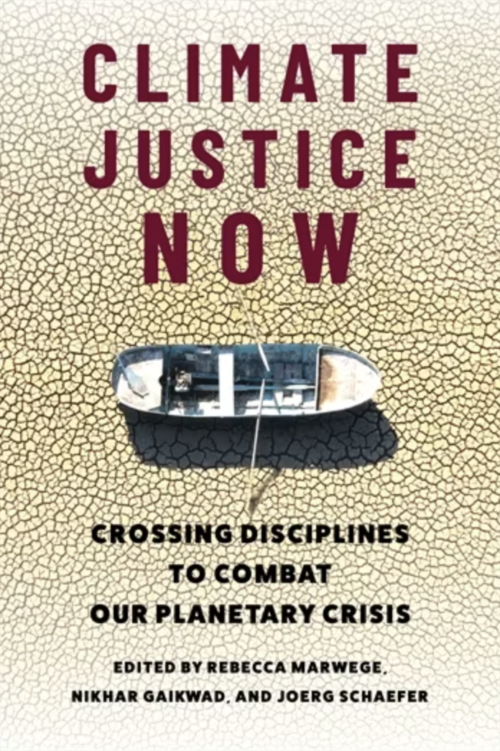
Climate Justice Now is available from Columbia University Press or wherever books are sold.


