- Share
-

-

-

-

Congratulations to Gary Comer Youth Center!
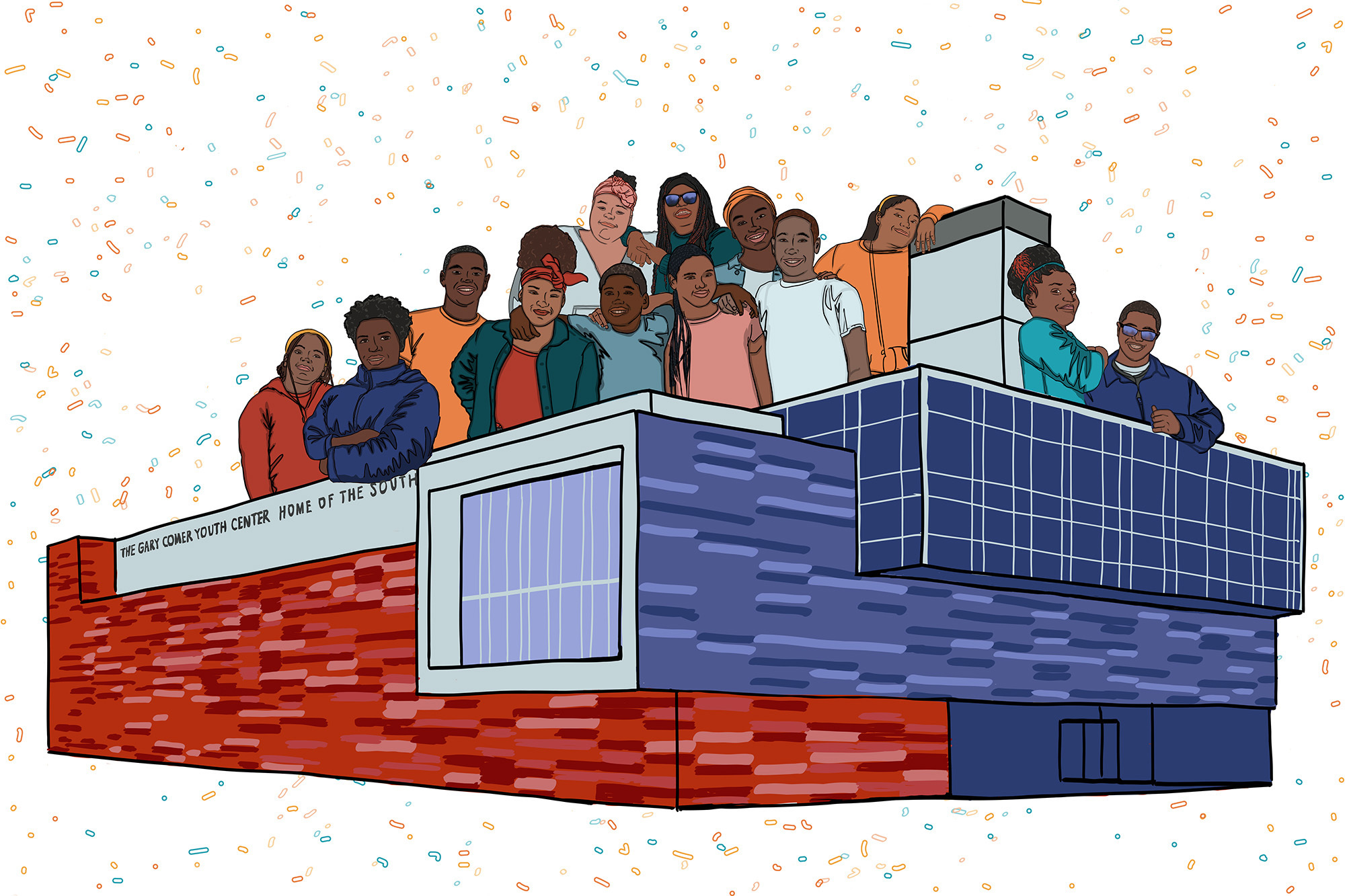
Illustration by Ellen Litwiller
Celebrating two decades of building excellence, empowering youth, strengthening community, & transforming lives
A Look Back At How It All Started
Growing up in the Greater Grand Crossing neighborhood of Chicago, Lake Michigan was an enticing geographic anchor. As a teenager, Gary Comer would often wander over to Chicago Park District’s Jackson Park Harbor seeking work. He found it scrubbing the bottoms of boats and eventually grew friendly with many of the sailors who became mentors and taught him their craft. He discovered he had a knack for sailing, later winning the North American Star Class Championship and earning a bronze medal in the 1959 Pan Am Games. His passion led him to start Lands’ End Yacht Stores in 1963, a mail-order business selling boat equipment, hardware, and the occasional sweater. Recognizing that sailing in the Midwest was seasonal, in 1977, Lands’ End pivoted to selling clothes. Though Gary sold Lands’ End to Sears Roebuck & Co in 2002, he never forgot his roots, including his formative years on the South Side, which set the trajectory for his life.
Gary’s transformative experience and adventures were at the heart of what he wanted to provide for the young people in his childhood neighborhood. On May 25, 2006, Gary Comer Youth Center (GCYC) opened its doors, expanding possibilities for a new generation through education and after-school enrichment programming.
Twenty years on, GCYC has surpassed Gary's original vision, helping 14,000 young people unlock their potential, develop their talents, strengthen their community and build brighter futures.
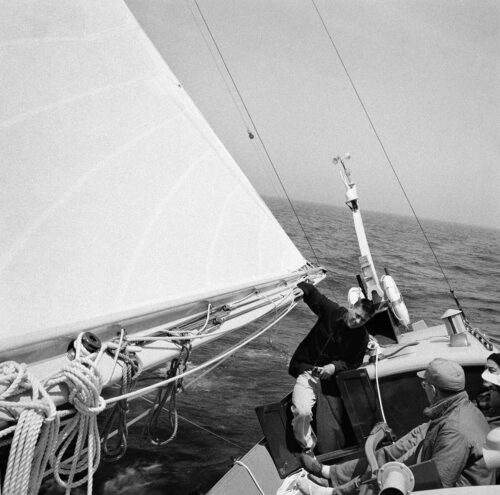
Gary Comer on Lake Michigan in the 1950s. Photo courtesy of the Comer family
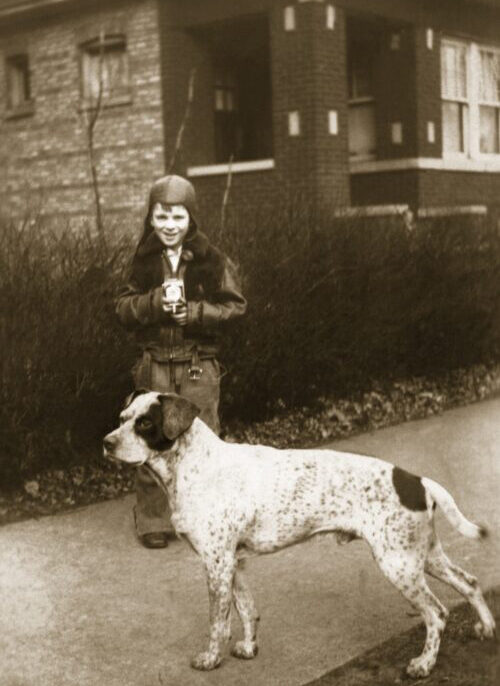
Gary Comer on South Woodlawn Avenue in Greater Grand Crossing. Photo courtesy of the Comer family
Excerpts from Gary Comer's Remarks at the Youth Center Ribbon Cutting on May 25, 2006
In 1999, the historian Tim Samuelson took me on a tour of my old neighborhood. I was born on 72nd and Woodlawn and grew up at 69th and Kimbark. The visit brought back many memories; memories of moving on the ice man’s day off with his horse-drawn carriage down the alley (because we didn’t have a permit); of my father stopping to swap a refrigerator someone had thrown out because it was better than the one we were moving. Our new house backed up on the Oakwood Cemetery wall. Somehow, we managed to muscle up and run down that 6-inch-wide wall without breaking our necks. I also remembered the characters in the neighborhood that shaped my early years, and of the grammar school which I attended. I wanted to revisit my old school, The Paul Revere Grammar School.
Children need a place to go after school
Principal Shelby Taylor thought Tim and I were a couple more suits from downtown — there to check up on one thing or another. I told him that I had graduated from Paul Revere in 1942; I surprised him when I asked “If there was anything I could do to help the school?” He told me the local school council had mandated the purchase of 20 computers, but he had no place to plug them in. I offered to wire them. So I wired the whole school, installed 250 computers, brought in tutors to teach the teachers how to use them, and bought computer programs that the kids could use, as well as a premier reading program called Accelerated Reader. Around this time, I began to realize the importance of after-school activities. Children need a place to go after school.
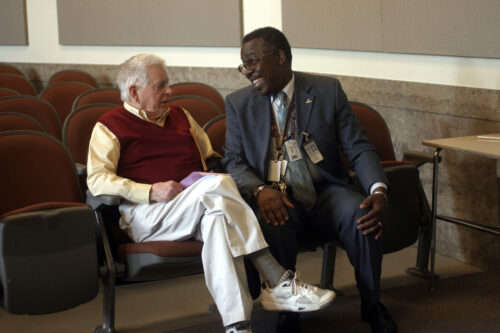
Comer and Principal Shelby Taylor at Paul Revere School in 2005. Photo by Jasmin Shah
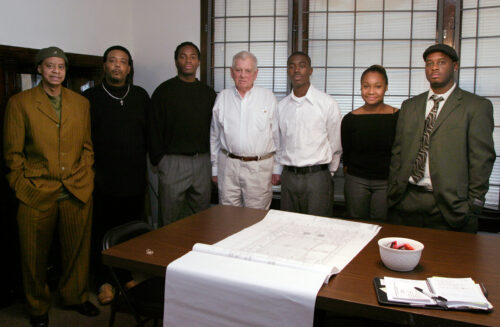
Arthur Robertson, Comer and Drill Team members at a 2005 planning meeting. Photo by Alison McKinzie
A wisp of an idea
This youth center started out as a wisp of an idea, a conversation with Arthur Robertson, which led to several more conversations. I met Arthur at Paul Revere Grammar School and learned about the South Shore Drill Team. Arthur told me about the places the Drill Team practiced—various school gymnasiums, parking lots, and churches—anywhere they could find.
Arthur and I were kids in this neighborhood. I grew up during the depression; he grew up in the 1950s. He became an educator and devoted his life to children. I made my mark in business. Arthur had changed the lives of over a thousand children, and he had done it with few resources. I realized I had the resources to help many more thousands of kids by providing a home for after-school activities and for the South Shore Drill Team.
This is how the Youth Center was started. It is dedicated to providing a greater opportunity for young people in this neighborhood to practice, to learn, to study, and to sharpen their skills and intellect. This Youth Center is for the children. May they use it well.
—Gary Comer, 2006
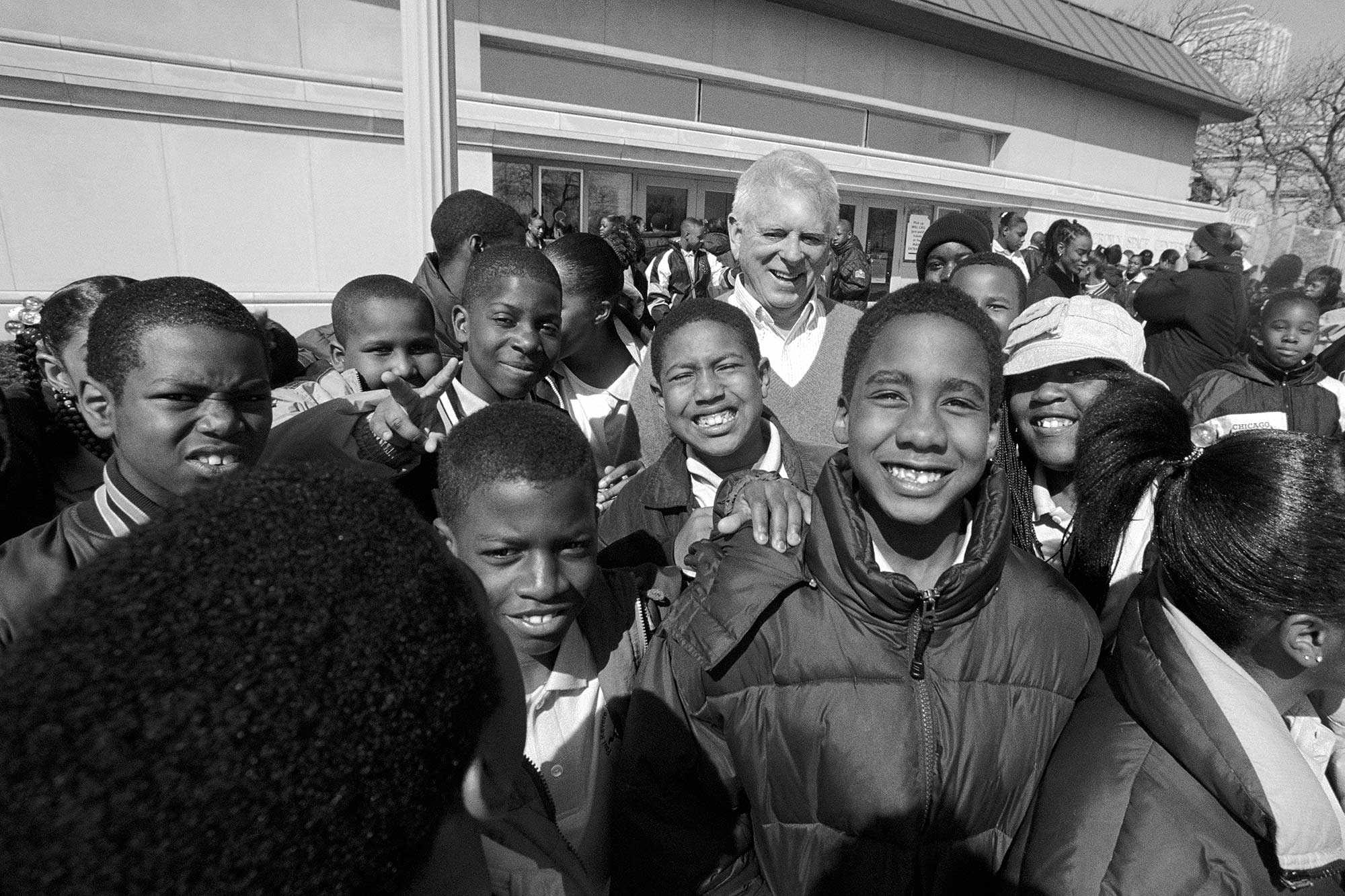
Photo by Wes Pope / CITY 2000

Photo by Jasmin Shah

Photo by Jasmin Shah

Photo by Jasmin Shah
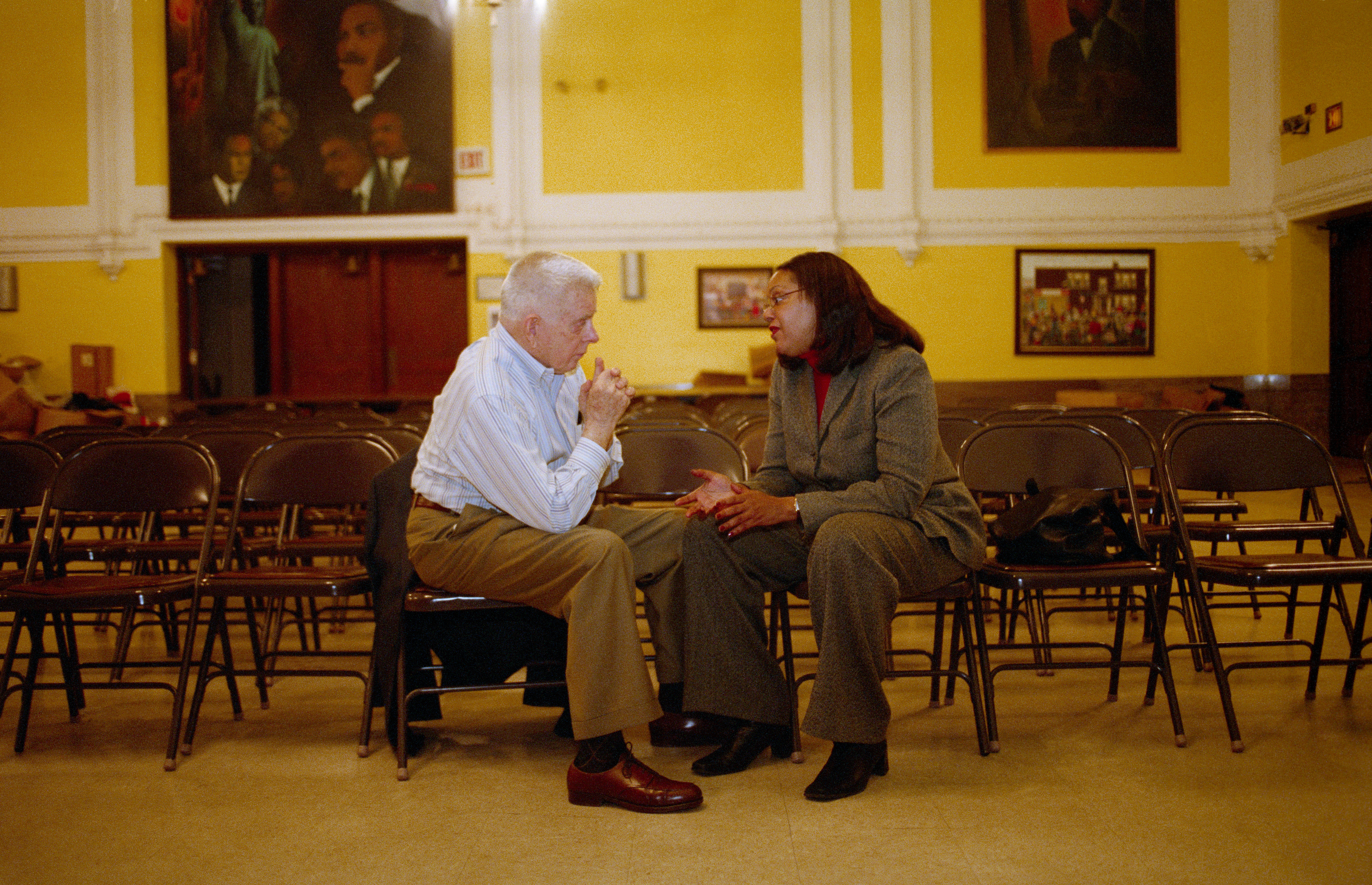
Photo by Jasmin Shah
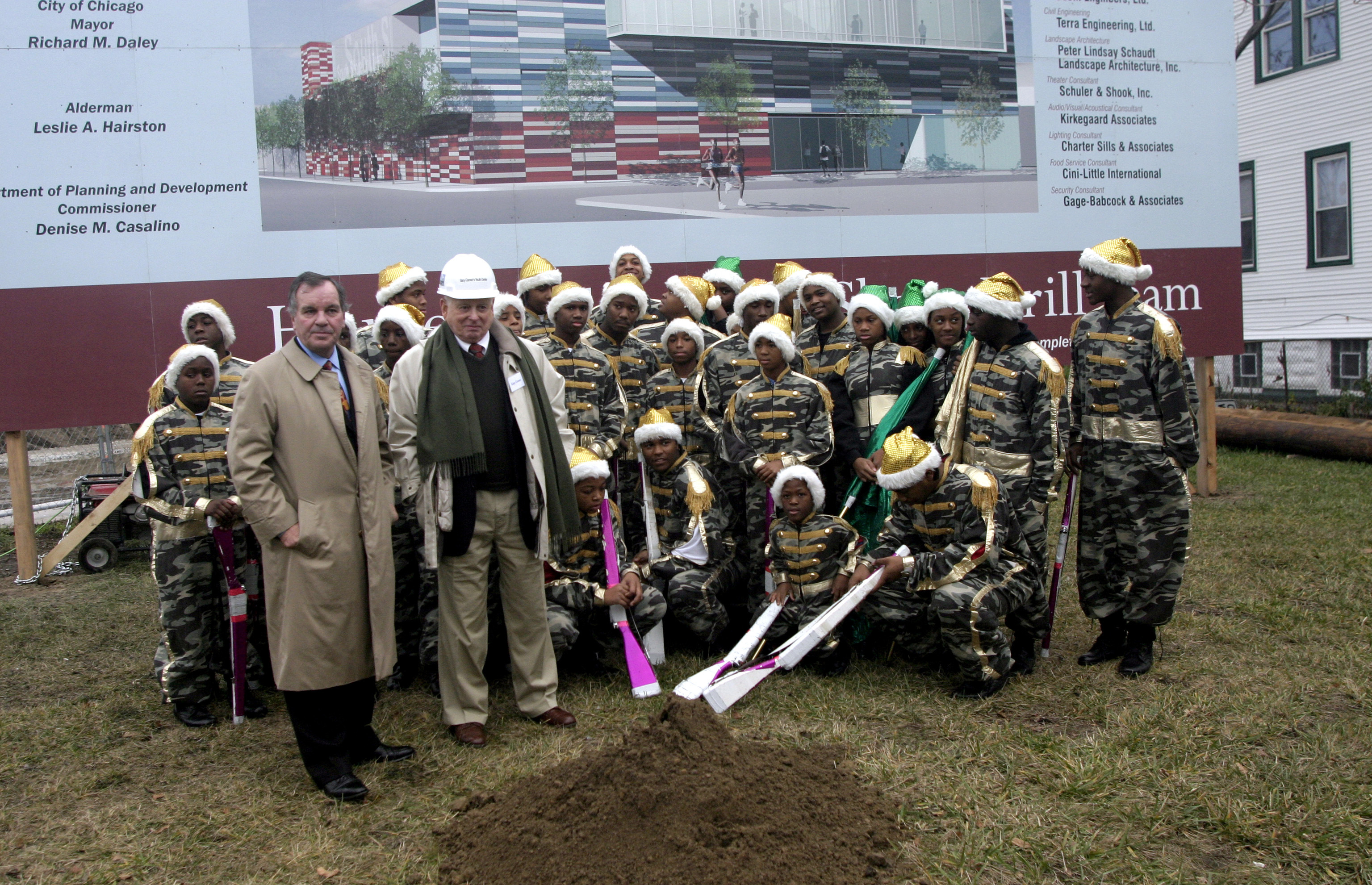
Photo by Jasmin Shah
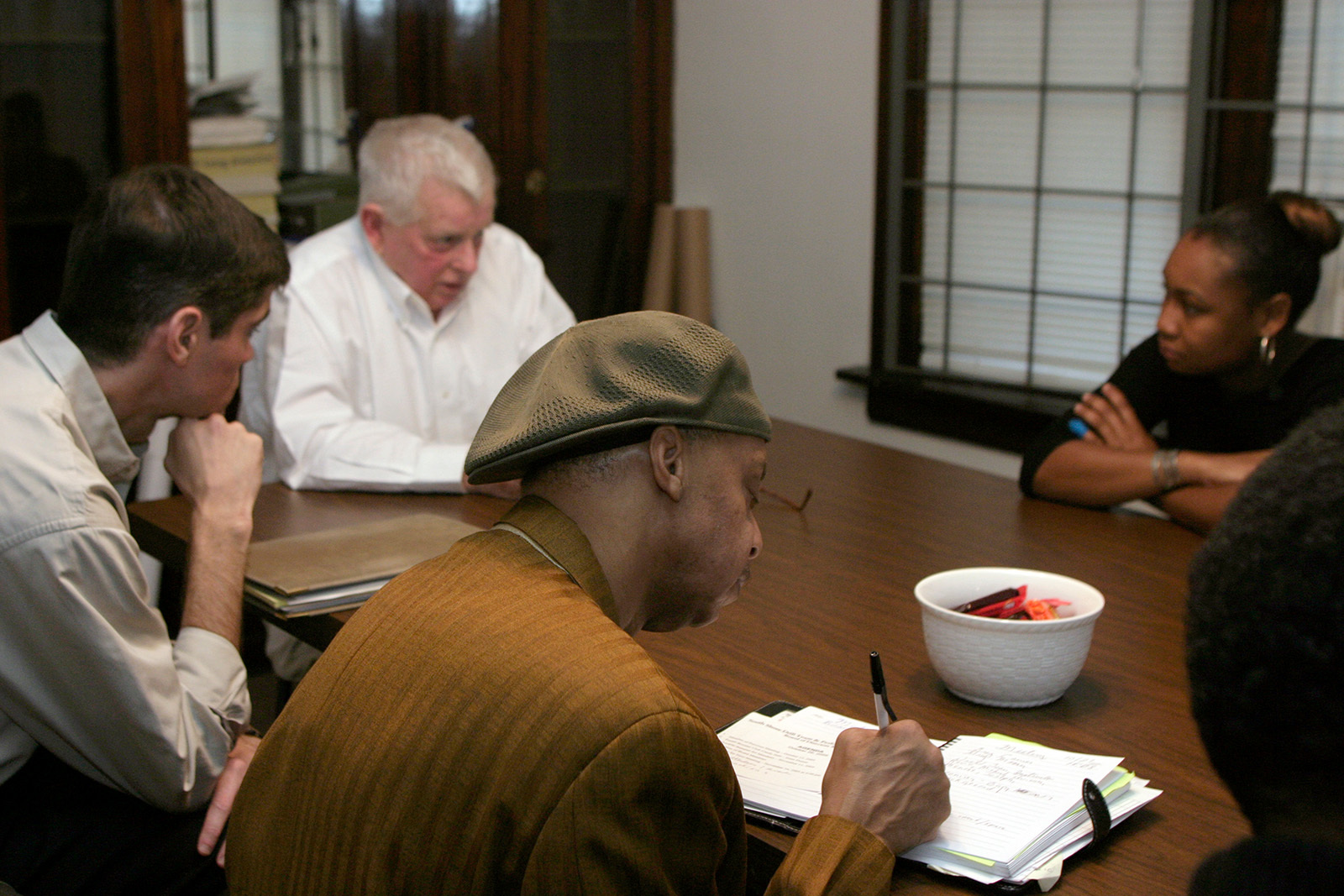
Photo by Alison McKinzie
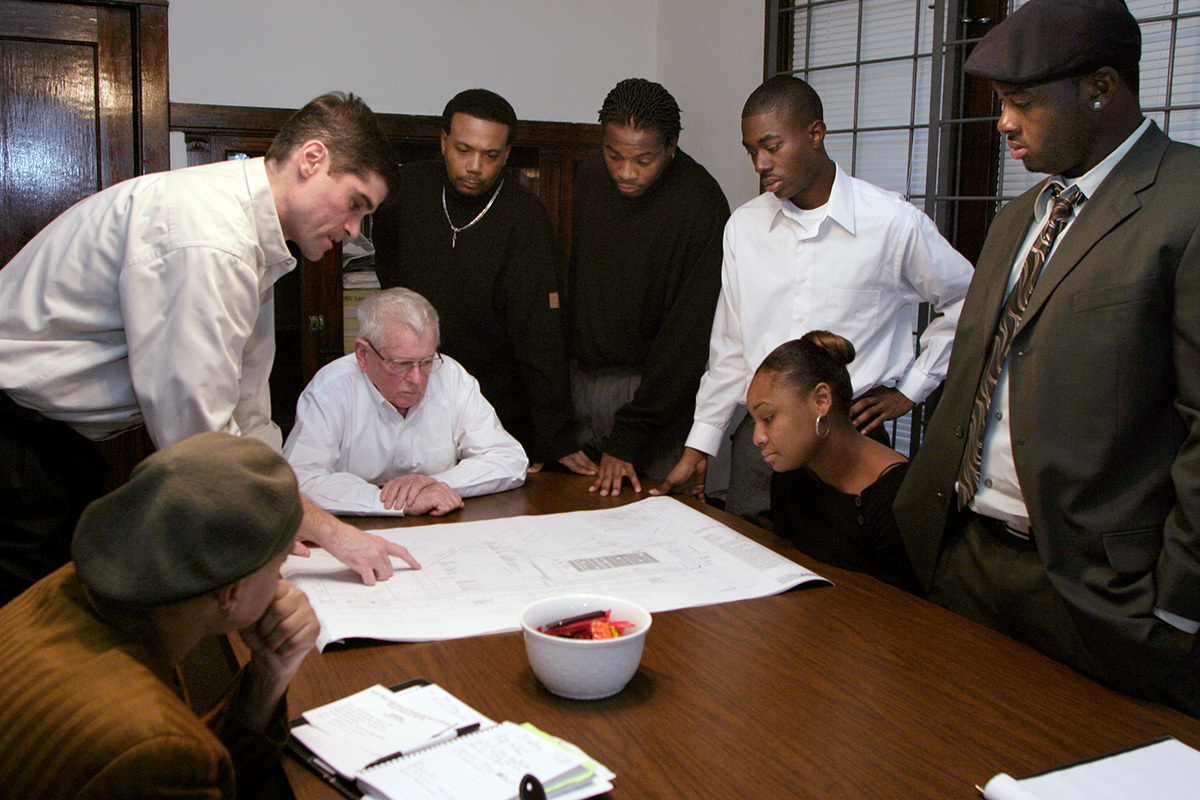
Photo by Alison McKinzie

Photo by Jasmin Shah
