- Share
-

-

-

-

Cultivating Resilience on Chicago's South Side
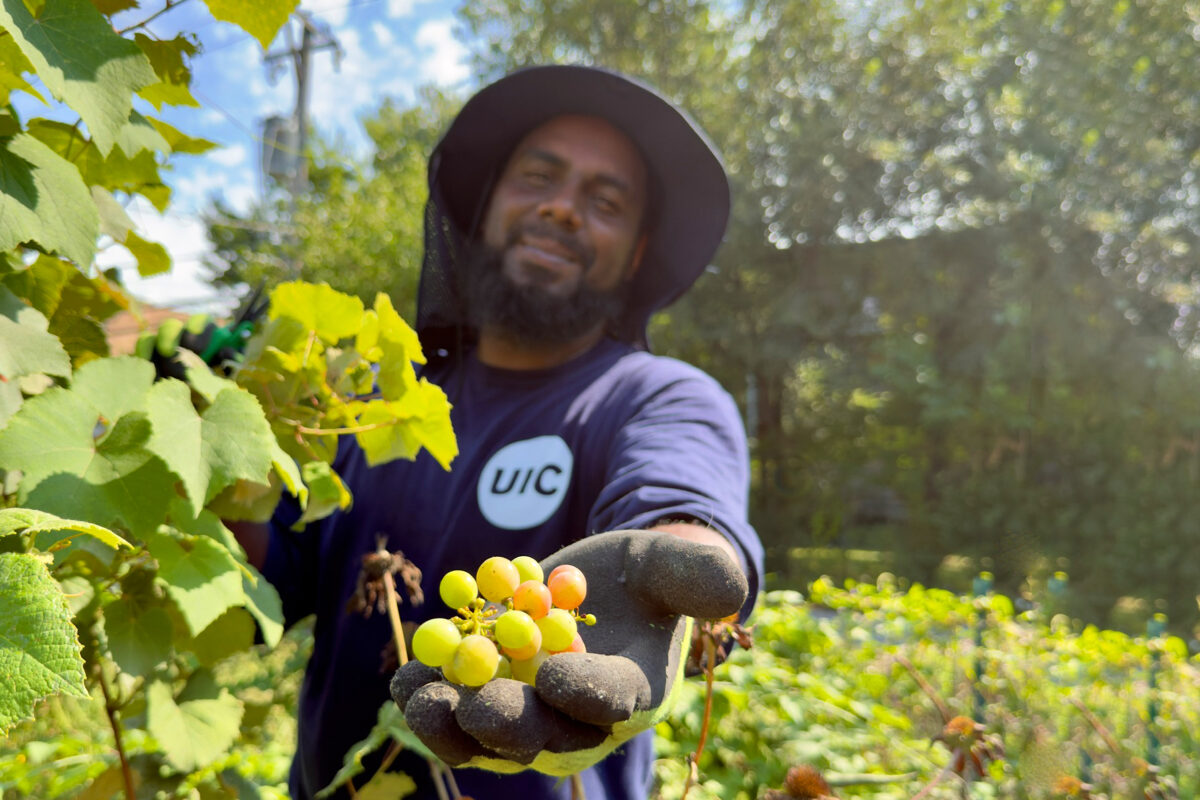
Vernon Fleming first got involved with the garden as a community member before he began lending his skills to fundraising and cultivating participation in the garden.
"We set out to teach our youth how to weed, prep, and plant a garden. But as we dug our hands into the soil, we realized we were growing something much more beautiful: a true community."—Vernon Fleming, Camp Director & Founder & CEO, South Side Consulting
Local Partners Launch Urban Farming & Youth Leadership Initiative in Washington Park
A vacant lot on South Calumet Avenue has been transformed into a verdant, living classroom that introduces its neighbors to urban agriculture as a means of food sovereignty as well as an antidote to cycles of environmental stress, trauma, and socioeconomic anxiety.
The lot was originally purchased from the city for $1 by Miss Phyllis Robinson. Chicago has sold thousands of city-owned vacant lots to encourage community involvement and reinvestment. Robinson knew she wanted to create an opportunity for residents to grow their own healthy food and started the garden alongside various partners over the years.
Over the summer of 2026, local resident Vernon Fleming of South Side Consulting, in close collaboration Robinson and The Black Star Project and the Wood Street Collective envisioned a Summer Urban Farming Camp to connect sustainable agriculture with financial capability and green entrepreneurship for 25 local youth from elementary to high school. The project applied an in-depth approach to restorative wellness, offering lessons on healthy eating as well as the mental health benefits of environmental and community engagement.
Beyond the garden beds, campers took their curiosity on the road, exploring the natural beauty of Washington Park on guided nature walks, dove into history at The DuSable Black History Museum and Education Center, and expanded our horizons surrounded by the incredible landscapes of the Chicago Botanic Garden. They celebrated the end of summer and the back-to-school season alongside Alderwoman Jeanette Taylor of the 20th Ward, sending the students into the new school year feeling supported, uplifted, and empowered.
A Garden in a Desert
Tomatoes, cucumbers, butternut squash, sage, mint, rosemary and honeybees — everything is grown without pesticide and free for the community. Neighbors plant individual plots choosing to grow plants they want to eat while volunteers work on shared eating, herb and aromatherapy gardens. In a neighborhood with only 3 grocery stores within a 10-mile radius, one of the joys of the garden is that community members don't have to travel to the store, they can shop in the garden.
The season will extend into the fall. "We’re going to try to cultivate this for the autumn, so that up until October or our first frost, whatever may come first, we’ll still be growing in the garden. We’re going to be planting more squash, cucumbers, cabbage, lettuce, greens of all types, so collard greens, multicolor greens," Fleming said.
My favorite thing was working [with youth]. I got to learn a lot from them, too. Seeing the convergence and we’re all still learning. Every day we’re learning something new, and we need each other.—Hector Torres, camp counselor
Sustenance & Spirituality
For Miss Phyllis, it’s all about promoting health and connecting community. “I like to see things grow. And we are a desert, a food desert. So my hope is that people will wake up, come out and garden and feed themselves organically and holistically," Miss Phyllis said.
From babies, young children, teens, young adults to elders, the camp, the individual plots and volunteer participation have created an intergenerational opportunity for the community to connect. The effect is both tangible and infectious. Once the summer camp was in full swing, parents in adjacent buildings began enrolling their children.
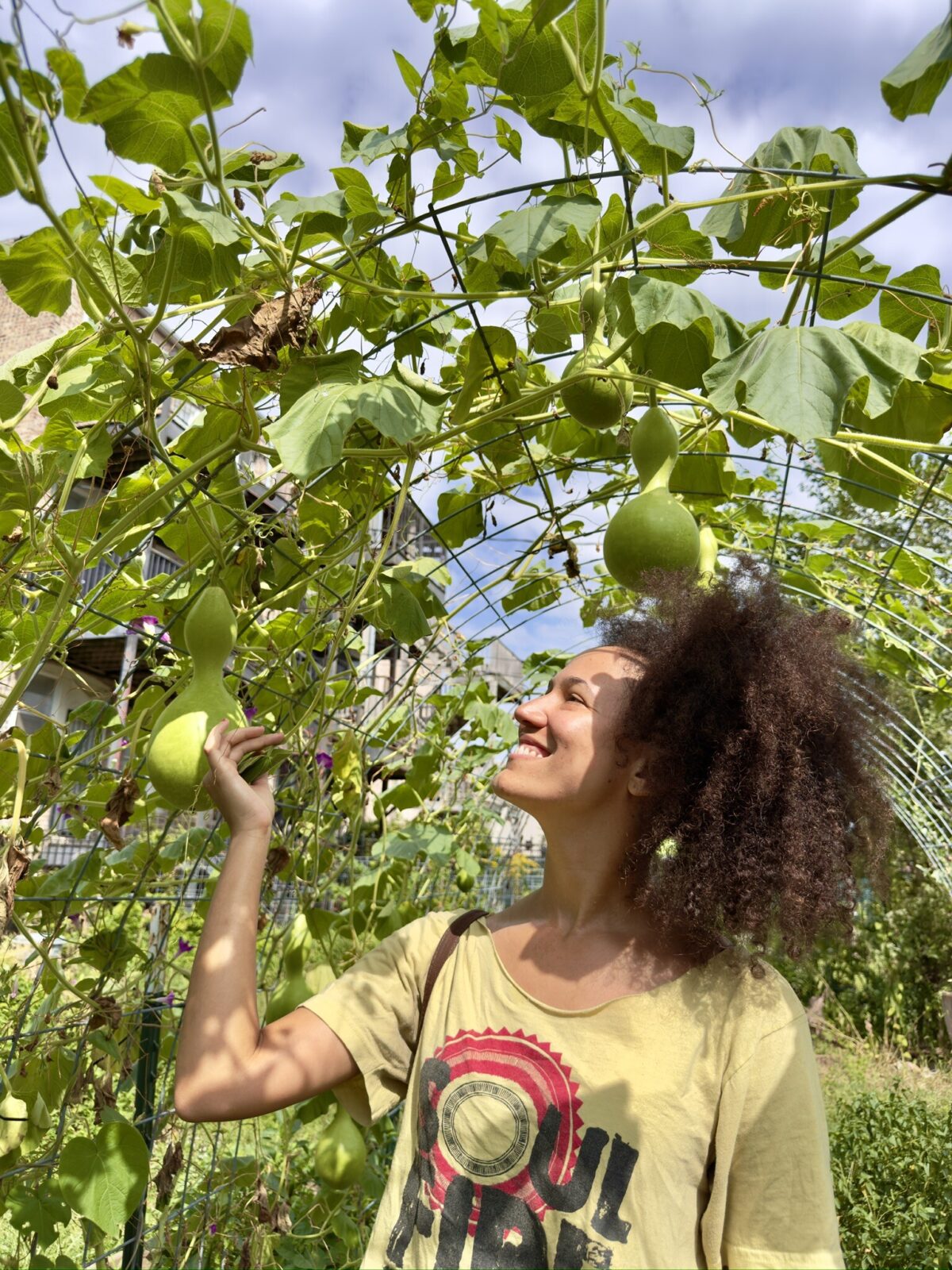
Danielle Russell just moved to the neighborhood last year. “I just asked around, 'what’s up with this garden? How do I get involved?' Everyone said ‘you’ve got to talk to Miss Phyllis.’ I was just walking one day, and then I saw a lady in the garden. I was like, ‘are you Miss Phyllis?’ She gave me a plot last year and then another plot this year. It’s so nice. I love it. Really being able to have space to grow," Russell said. Growing gourds particularly has meant a lot to Russell. "Gourds are really important in African American history. Many diaspora instruments are made out of gourds," Russell explained. The "drinking gourd" is another name for the Big Dipper constellation which enslaved people used to navigate as they traveled North to freedom. With so much cultural and spiritual significance she wanted to grow them.
Crystal Eatman mentors at-risk youth through the Illinois Youth Investment Program placing them in employment opportunities. "My participants loved it," said Eatman. "We were responsible for taking them on field trips. It gave them exposure to actually figure out how you plant food, produce it, and how it ends up on their table."
Hector Torres worked as a camp counselor where he learned about farming but also about abundance. Hector said he "...got to learn a lot about decomposition, how you've got to soften the dirt in order to plant before you actually just throw seeds in there. Whenever I have free time, I like to be here. You want to be really free, but we get so caught up in trying to get what the next person has."
Gardeners, volunteers and organizers agree this journey has been nothing short of transformative. All involved plan to deepen their commitment to this work going forward.
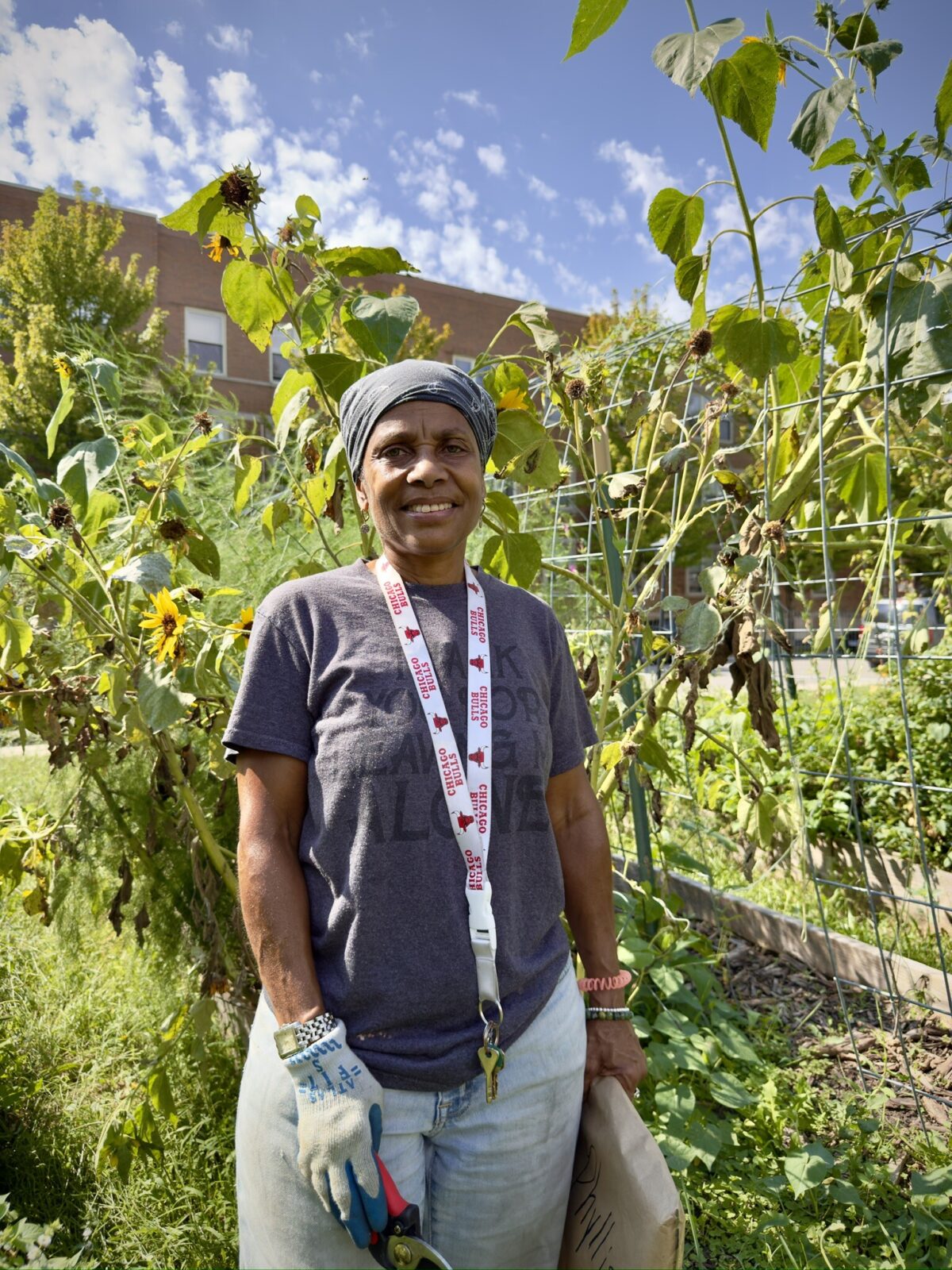
“I like to see things grow. And we are a desert, a food desert. So my hope is that people will wake up, come out and garden and feed themselves organically and holistically.”
—Miss Phyllis Robinson
"It is important to me that there are places for people to connect to nature. There is a certain oasis that is here in this garden. It’s just a protected space in that way. I know it’s just going to be like a nice, peaceful, chill little vibe where I can look at butterflies and birds. Being able to come here helps me to cultivate my own connection to nature."
—Danielle Russell
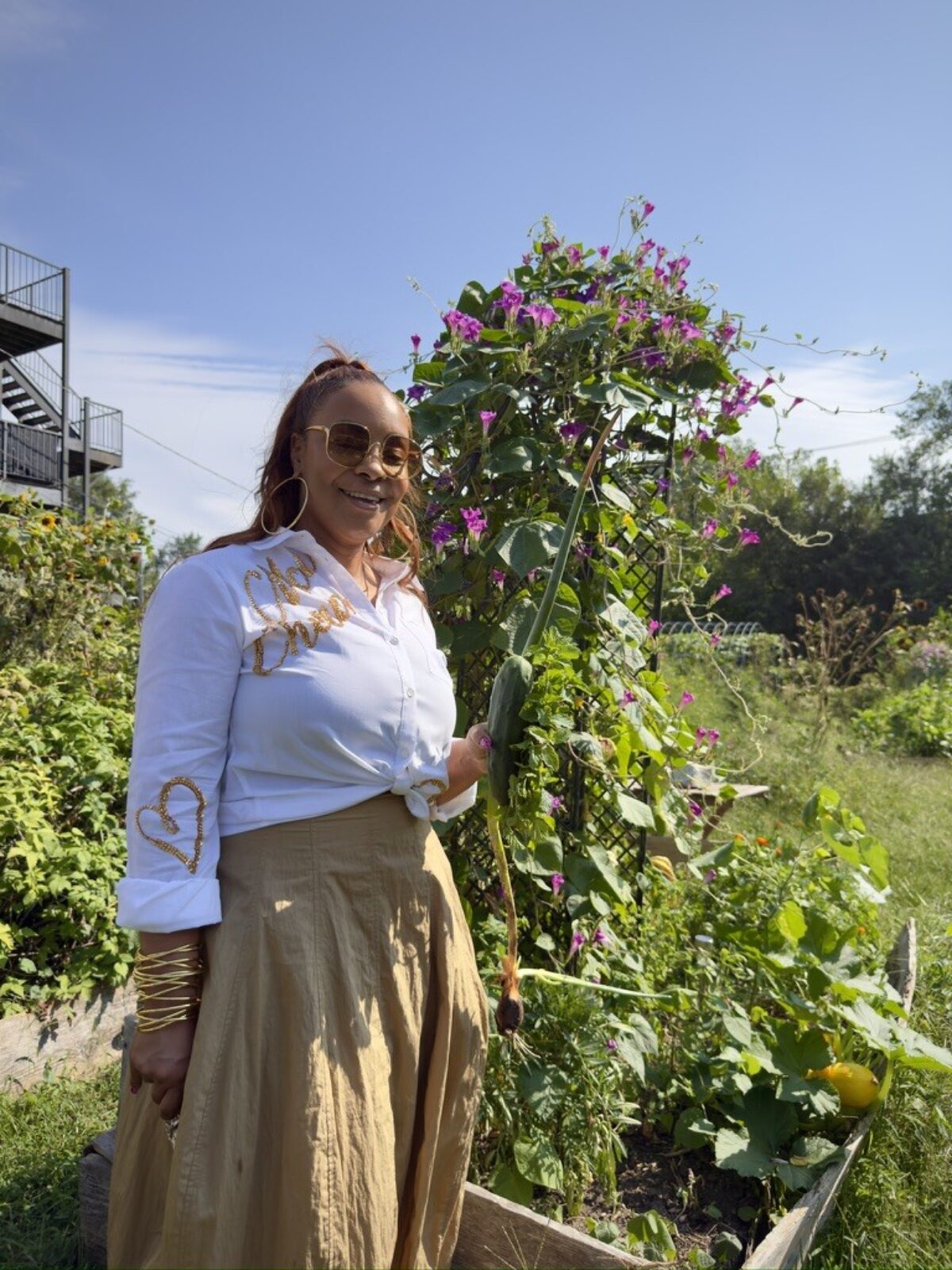
"My participants loved it. It gave them exposure to actually figure out how you plant food, produce it, and how it ends up on their table."
—Crystal Eatman
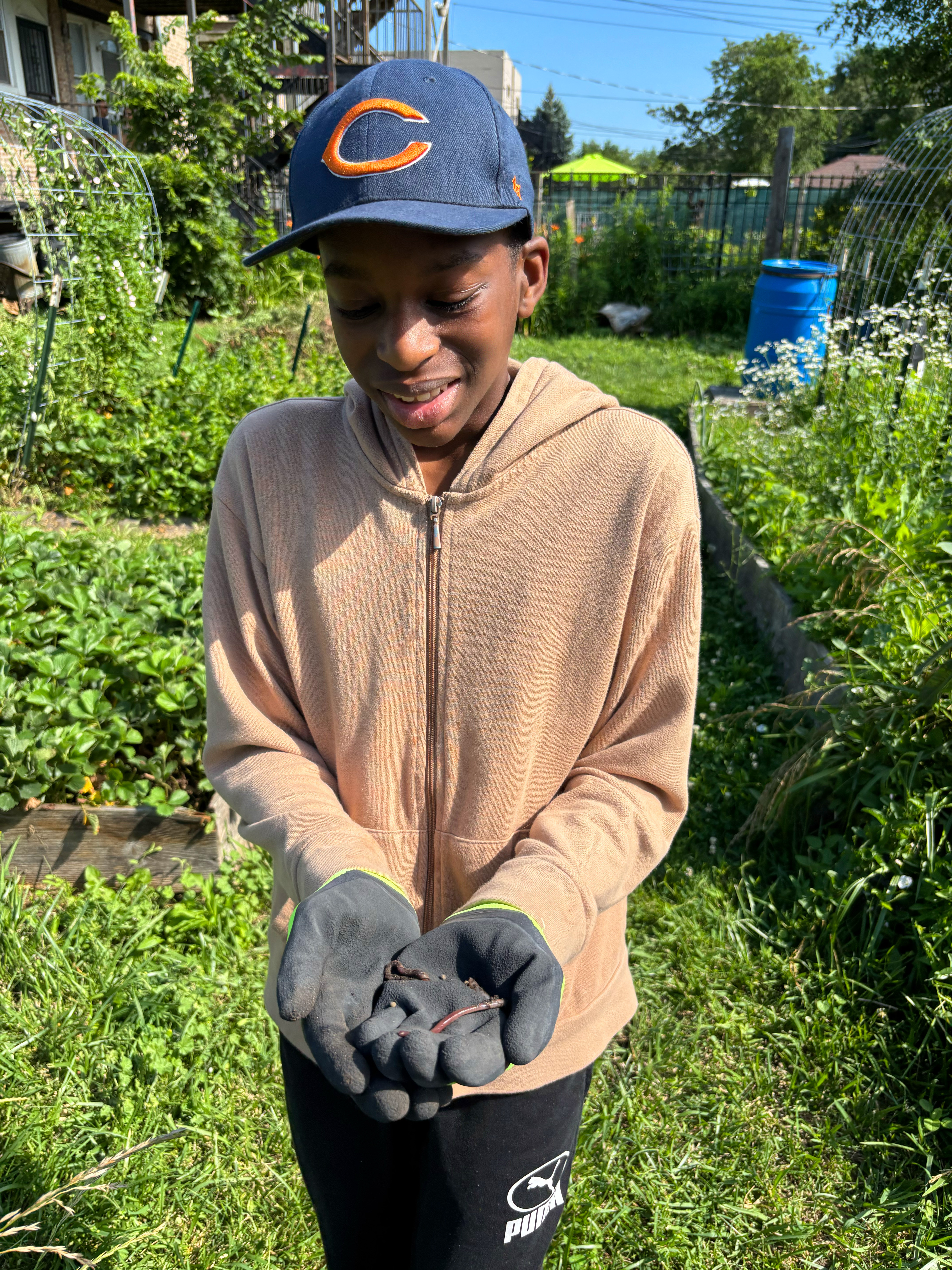
Campers learned how to weed, prep, and plant a garden. While digging in the soil, they met some new friends. Photo by Vernon Fleming.
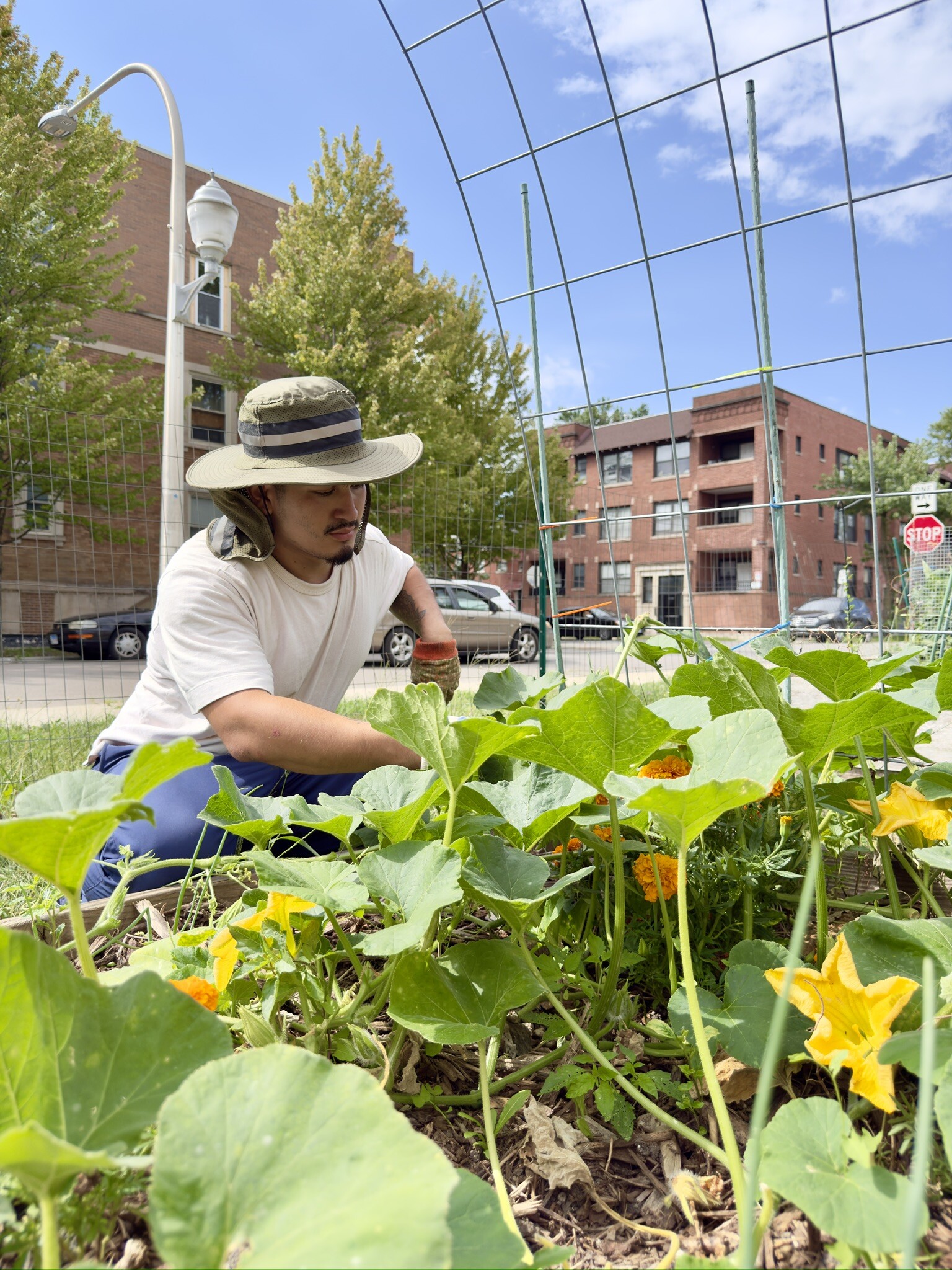
Hector Torres continues to volunteer in the garden whenever he has free time. Photo by Alison McKinzie.
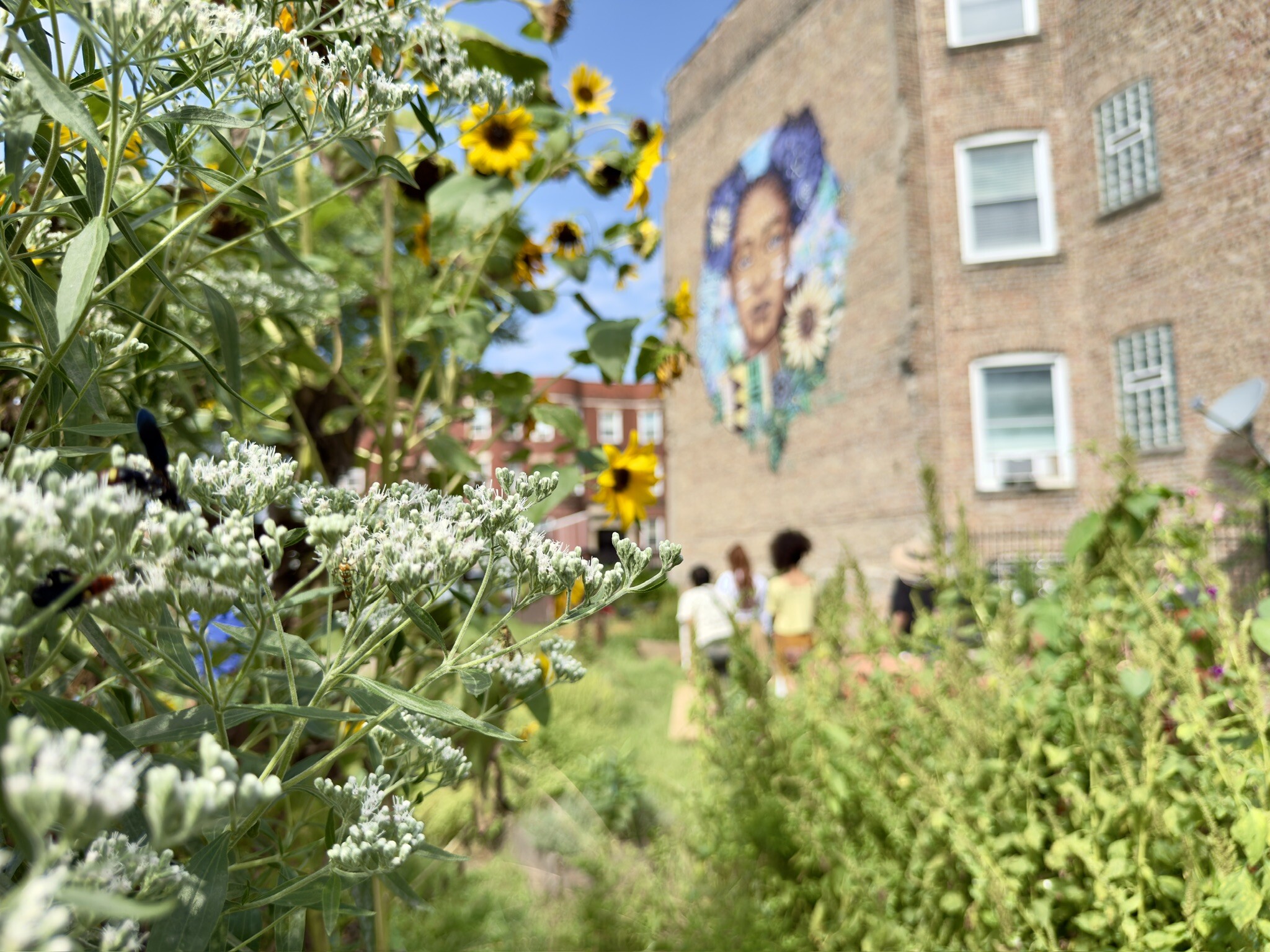
The mural overlooking the plot honors a young girl from the neighborhood, a victim of gun violence. Photo by Alison McKinzie.
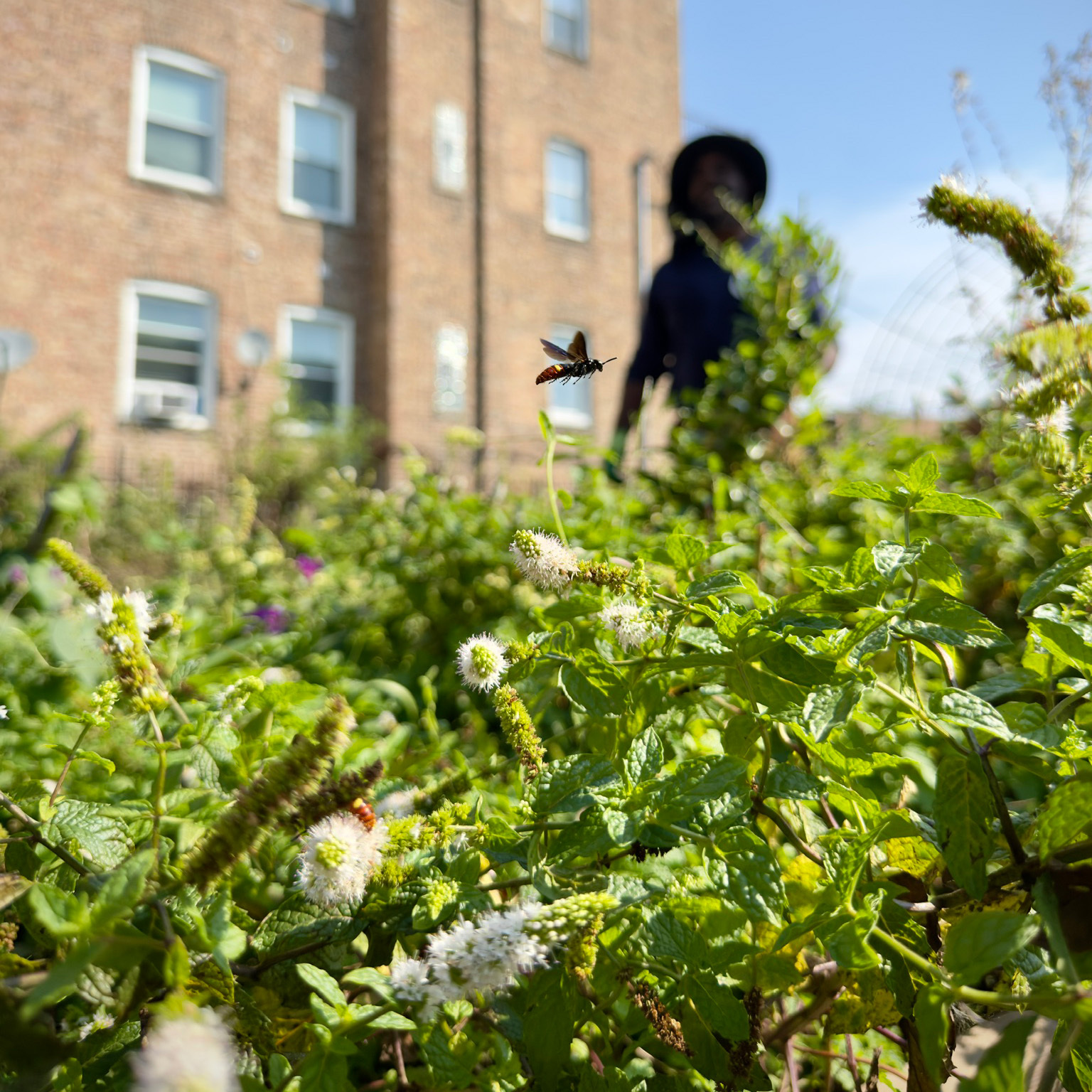
The pesticide-free garden is home to honeybees and many pollinators and butterflies. Photo by Alison McKinzie.
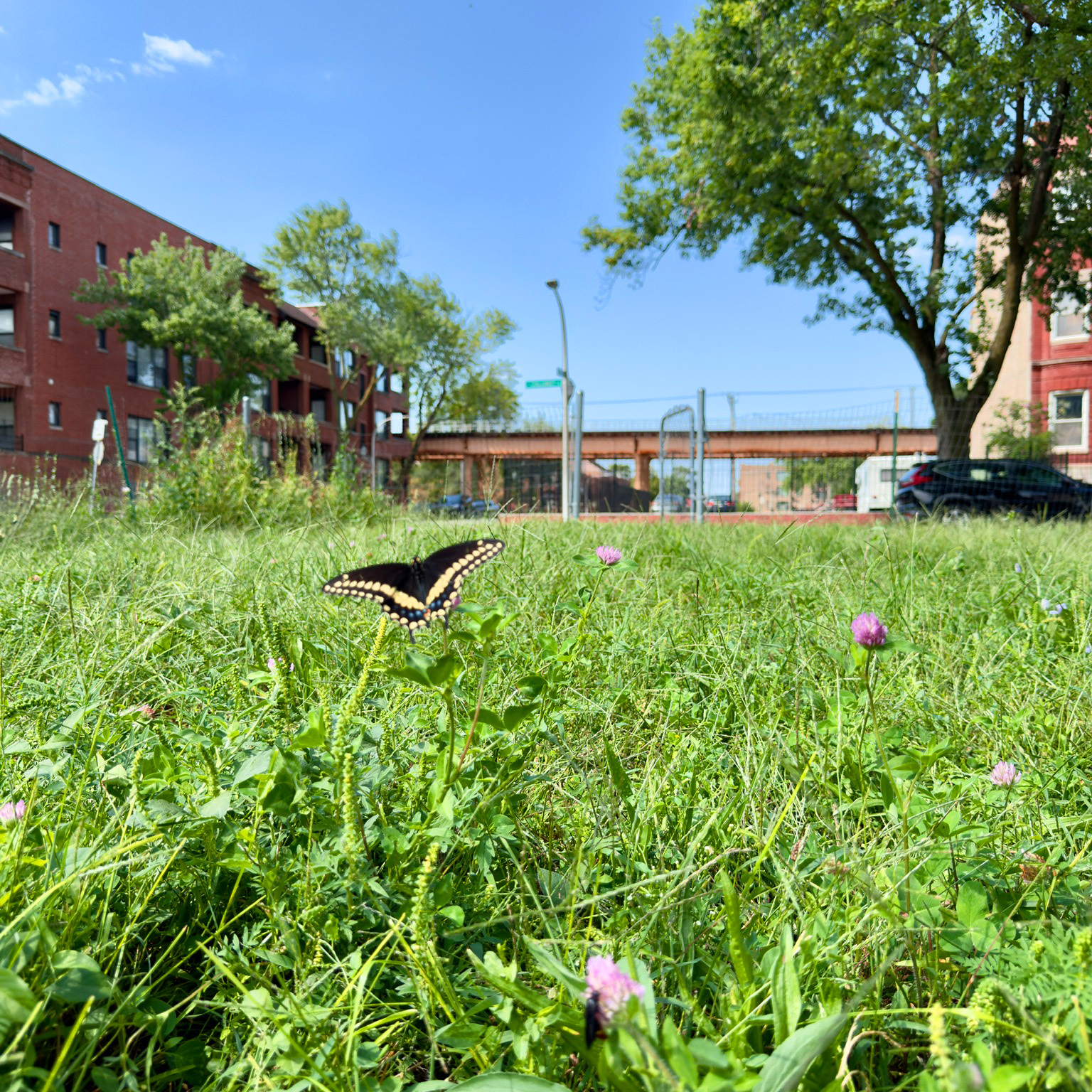
A swallowtail butterfly pauses amid the clover. Photo by Alison McKinzie.
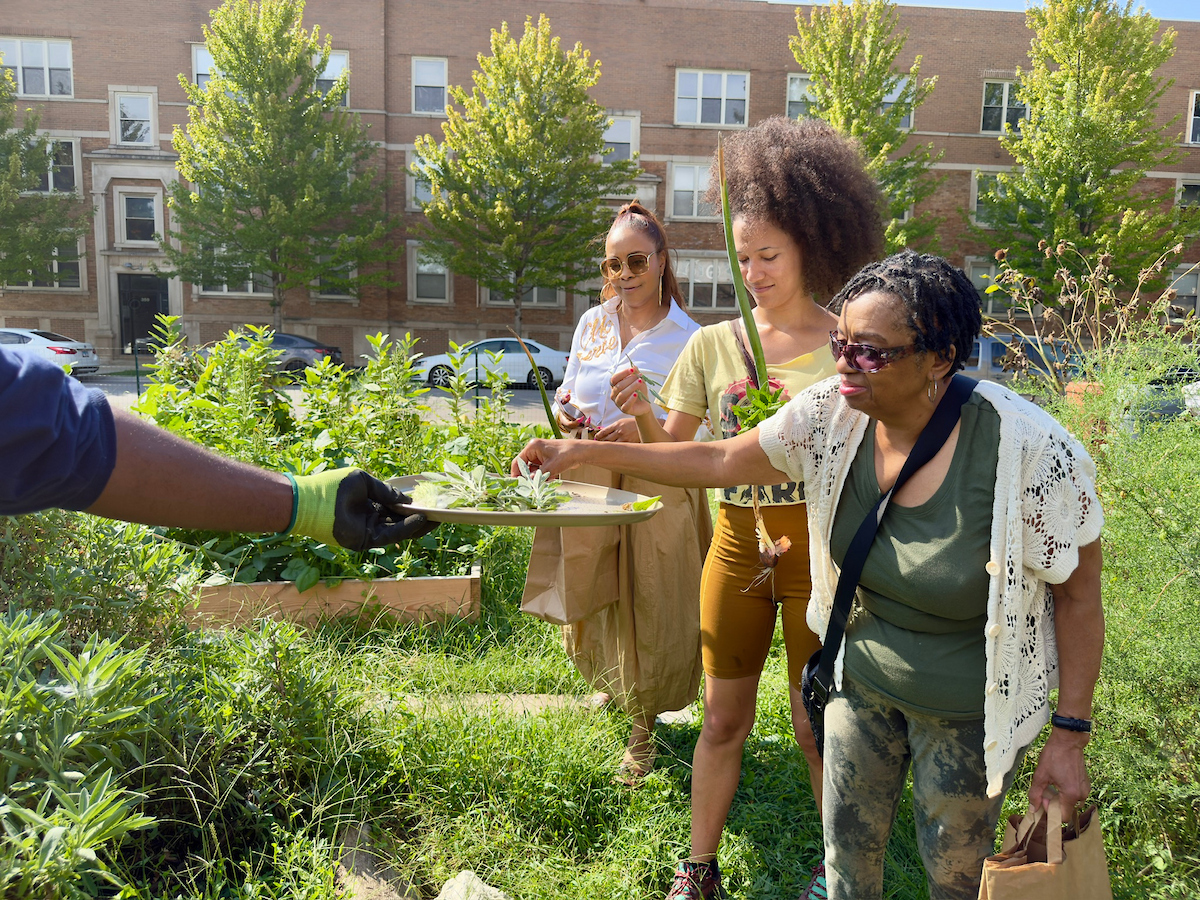
Gardeners interested in homeopathic medicines grow a variety of herbs such as sage, rosemary, lavender and mint. Photo by Alison McKinzie.
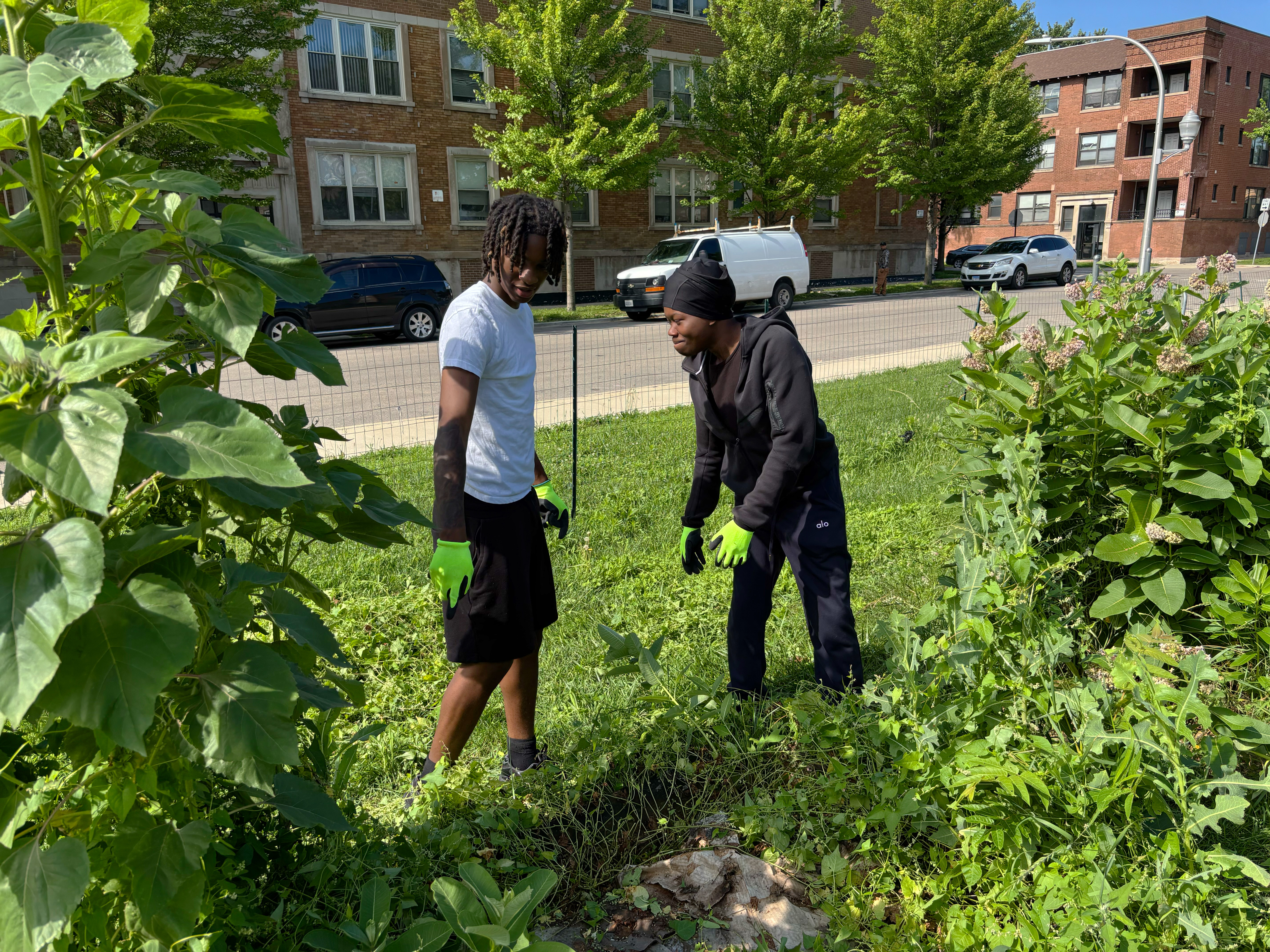
In addition to learning to grow their own food, campers enjoyed field trips and civic engagement throughout the summer. Photo by Vernon Fleming.
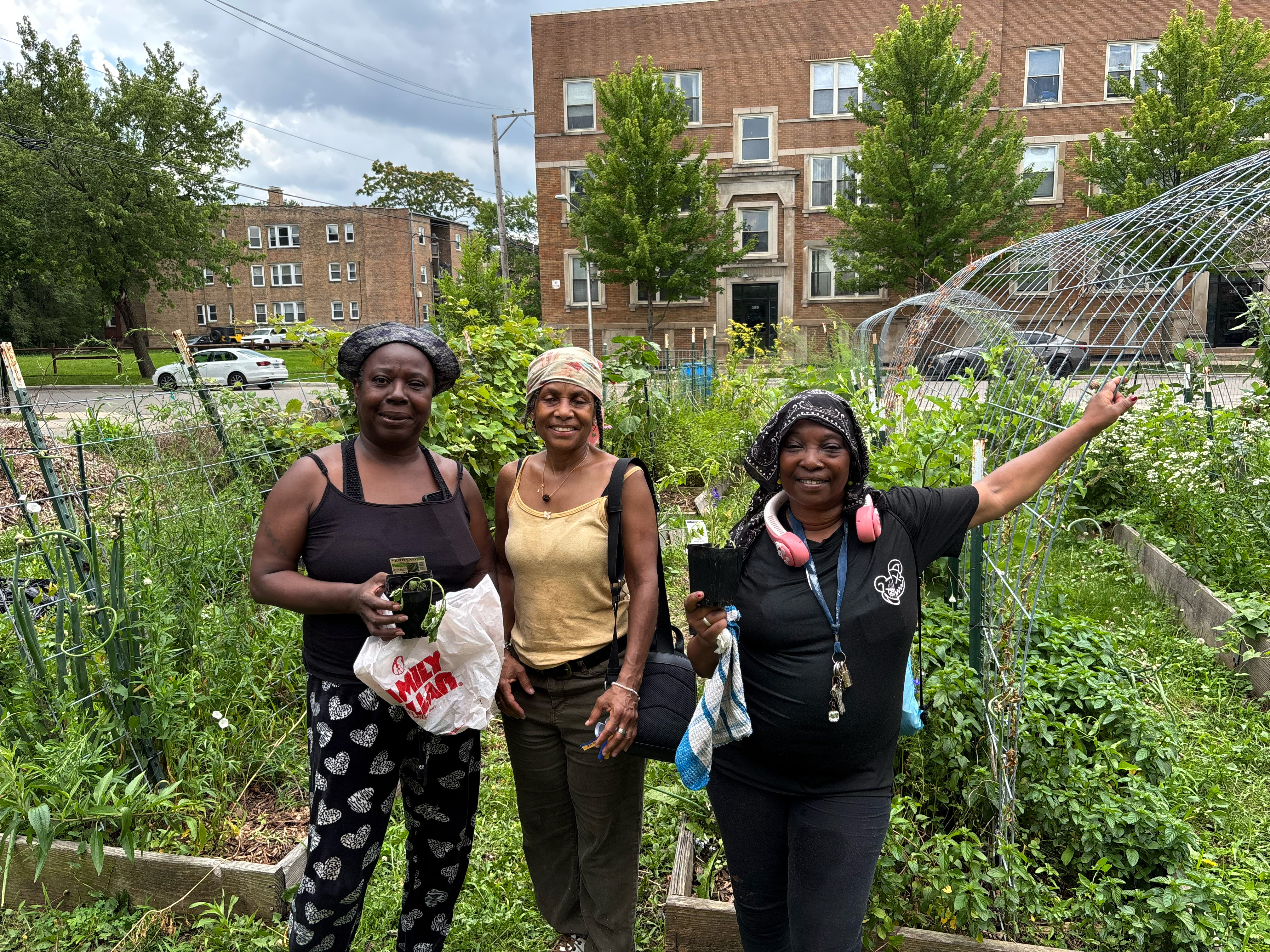
The garden brings together many generations to grow healthy food. Photo by Vernon Fleming.