- Share
-

-

-

-

With hundreds of papers, tens of thousands of citations and many honors from prestigious organizations, including the American Geophysical Union and the Fulbright Program, Jerry McManus, professor of earth and environmental sciences at Columbia University, is an accomplished scientist.
“He’s very diligent,” Celeste Pallone said. “He does a lot of work to make sure the kind of opinions or arguments he’s making are backed up by solid evidence.”
Pallone was a student of McManus and is now a postdoctoral associate at the Massachusetts Institute of Technology. According to Pallone, McManus is adaptable, always willing to learn new methods and techniques as the questions and topics in his field evolve. These qualities are what have helped propel him to his current level.
But to his students, McManus isn’t just a great scientist. He’s an even greater mentor.
“He would hate if I was saying this. He’s so humble. But usually when you meet someone of his caliber, someone who’s cited as many times as he is, you would think they would be very arrogant,” Apollonia Arellano, one of McManus’ graduate students, said. “But he’s very humble. He’s very kind, and I think he brings all those things into his work.”
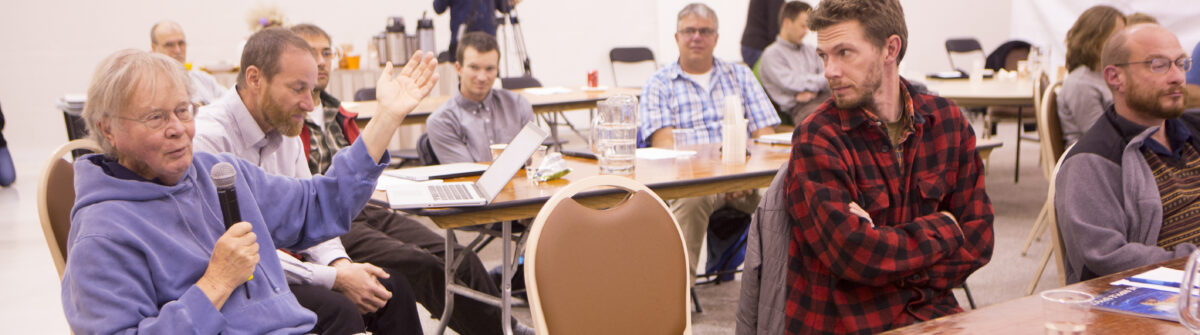
Wallace Broecker holds the mic at the 2014 Comer Climate Conference. From left: Jerry McManus, Sean Birkel, Benjamin Hatchett, Douglas Boyle, Aaron Putnam, Michael Kaplan.
An unexpected gift
McManus recalled a phone call that marked a pivotal moment in his career. At the time, he had been working as a research scientist at the Woods Hole Oceanographic Institution after graduating from Columbia University in 1997 with a Doctor of Philosophy in Earth science.
McManus had received a call from his former advisor, renowned geochemist Wallace Broeker, informing him that Gary Comer was interested in his research. A few days later, he received another call from Comer’s representative, requesting a meeting with him.
“Where are you?” McManus asked.
“We’re in New York right now.”
“Well, I come to New York every couple of months. I can be there in March.” “He’d like to meet you today.”
McManus was in Cape Cod, Massachusetts, hundreds of miles and hours away from New York, but Comer paid no mind, and in two hours, flew up to meet him for dinner. Over their meal, the two chatted about their upbringings, McManus’ in New York, Comer’s in Chicago, and only touched on McManus’ research a little bit.
“I think he wanted to look me in the eye. He wanted to get a sense of me,” McManus said.
And then, unexpectedly, Comer announced he would fund McManus’ research group–but there was a condition. The money was not meant to be used on himself but for younger scientists. Comer envisioned experienced researchers mentoring the next generation of scientists, and McManus himself took to this idea.
He leveraged the funds to hire postdoctoral researchers and support doctoral students looking to advance their careers. Before long, McManus found himself even more involved with Comer and his work, becoming a mentor for The Comer Abrupt Climate Change Fellowship, which brings together brilliant researchers across disciplines, many of whom are leading their own departments and institutions or who have advised governments, to tackle challenging questions related to abrupt climate change.
After Broecker’s passing in 2019, McManus was selected as one of two people to officially run the meetings at the Comer Climate Conference. McManus also serves on the board of the Global Climate Change Foundation, which Broecker, founding mentor of the Comer Fellowship, established to further fieldwork in paleoclimatology.
McManus plays an important role in creating a space for researchers, whom he describes as “prominent, brilliant, busy people,” and helping them find that common thread as they tackle the climate problem from different angles. Since his days at WHOI, McManus has been passionate about making room for the next generation of scientists through mentorship, continuing to carry forward the vision that Comer initially supported.
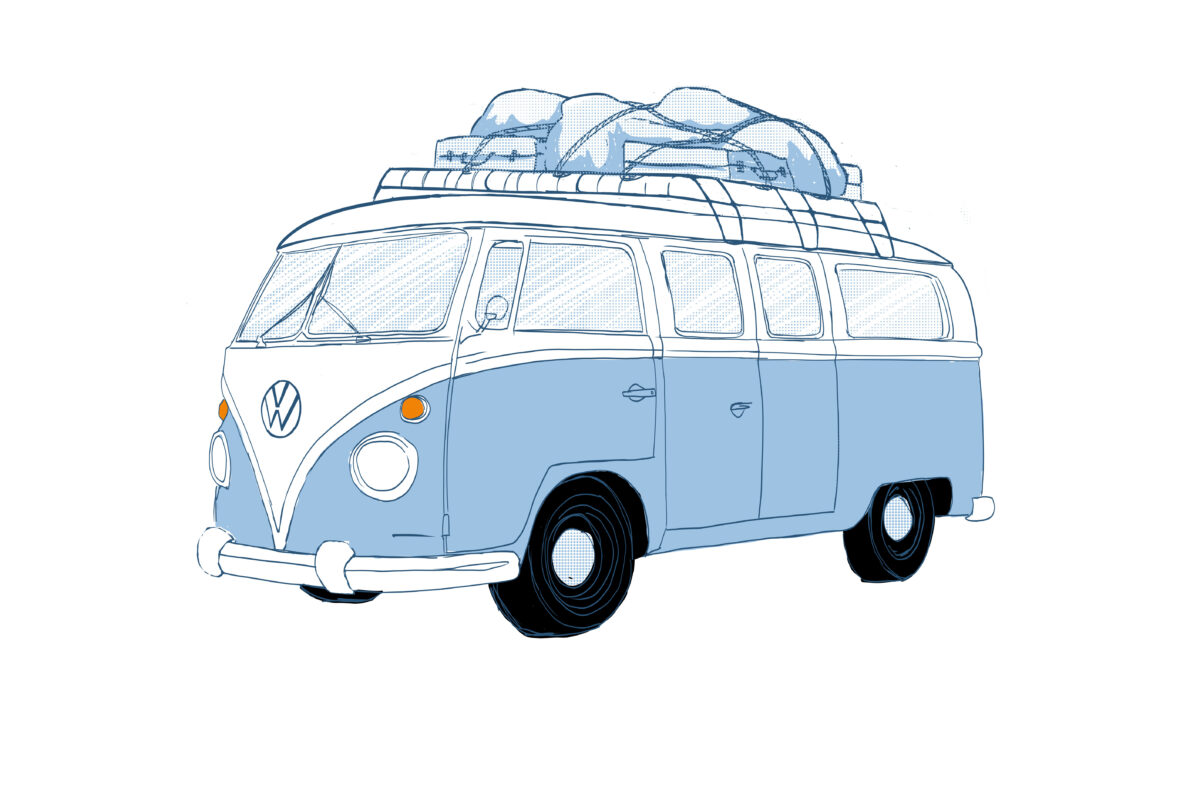
The McManus family recall piling into a blue Volkswagen bus to go camping. Illustration by Ellen Litwiller.
A mother who continues to inspire
McManus grew up in a working-class neighborhood in the Bronx. His parents raised ten children, including McManus, and he recalled many fond memories from his childhood, including when his family would pile into a van and go camping, finding joy in the little moments as they crammed themselves into one big tent.
The “togetherness” of his family he attributes to his mother, who, for years, was the driving force behind annual family reunions. With 23 grandchildren and twelve great-grandchildren, McManus describes his mother as “quite a matriarch.” She was also the motivation behind her children’s education, reminding them that it was more valuable than material possessions and even obtaining a degree herself from Hunter College, part of the public City University of New York, while raising all ten of them. The fact that every one of her children graduated from college is a testament to how she has inspired McManus and his siblings.
“She always was an inspiration,” McManus said. “It just makes me think I could do a lot more. If she can accomplish all this, I could stop complaining about the little issues in my life.”
McManus carries this same spirit as he builds a family of his own in the work he does at Columbia University’s Lamont-Doherty Earth Observatory, where he is studying multiple threads related to abrupt climate change and ocean dynamics, work that aids in our understanding of the changing climate we see today.
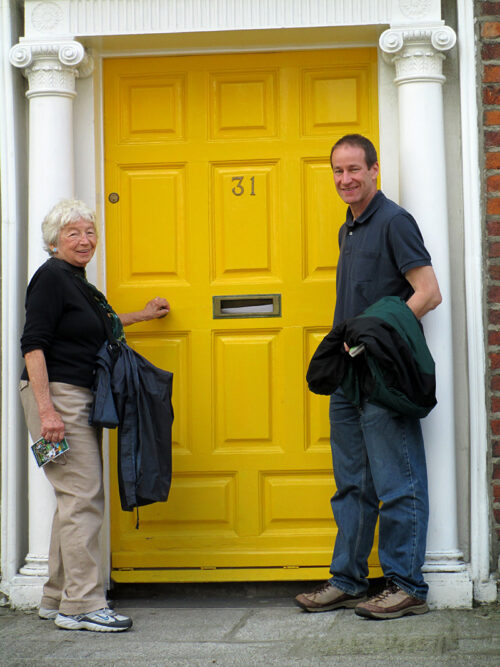
Jerry McManus with his mother, Patricia Vanca McManus, on a self-guided tour of the famous Doors of Dublin in Ireland. “It rained on us at least part of every day of the trip,” McManus said, “but that never dampened my mother's spirits, and it was glorious when the sun occasionally came out.” Photograph courtesy of the McManus family.
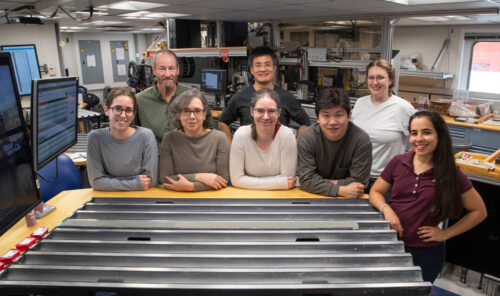
Jerry McManus and his former student, Celeste Pallone, with the rest of the Expedition 397 sedimentology team. Photograph courtesy of Sandra Herrmann, International Ocean Discovery Program, JOIDES Resolution Science Operator.
Building up the next generation
It’s not uncommon to hear students of McManus describing his laboratory as a family. Currently, his family consists of three graduate students, but surprisingly, for a scientist of his caliber, he also works with many undergraduates.
“That is uncommon about our group,” Arellano said. “That’s something that’s very admirable about Jerry and our lab group, that even if they’re undergraduates –or we’ve even had some high schoolers– they have their own project.”
Instead of giving them menial tasks, such as washing beakers or data entry, McManus challenges his undergraduates to contribute to the research they’re conducting and carry out their own work. This is one of McManus’ most noted qualities, the way he champions young scientists, no matter what stage they are in, and even if they have yet to prove themselves.
Yuxin Zhou, a former student of McManus who is now a postdoctoral scholar at Georgia Tech, recalled when the AGU invited McManus to a banquet to receive a prestigious award. McManus invited Zhou and Pallone to accompany him. Zhou noticed that instead of inviting family members or senior colleagues like everyone else, McManus had also brought many student researchers, giving them the chance to network with prominent scientists.
Through the Comer Family Foundation, McManus has also helped countless junior scientists advance their careers by inviting them to the annual Comer Climate Conference. Arellano, Zhou and Pallone have all attended at some point and remember their time there as an example of how McManus provides them with unique opportunities, including access to a network of experienced scientists.
“Prior to going to that conference, I’d only really done posters,” Arellano said. “It was a little bit intimidating to get up there and give a talk in front of important people in your field, but everyone was so welcoming and kind.”
There’s also a motto McManus always says, remembered by many of the students who have come in and out of his lab: “We’re not about blame. We’re about getting things right.”
“He understands that people make mistakes,” Zhou said. “He never wants to assign blame. He just wants us to improve as scientists and make sure we think of ways to correct whatever mistakes we make.”
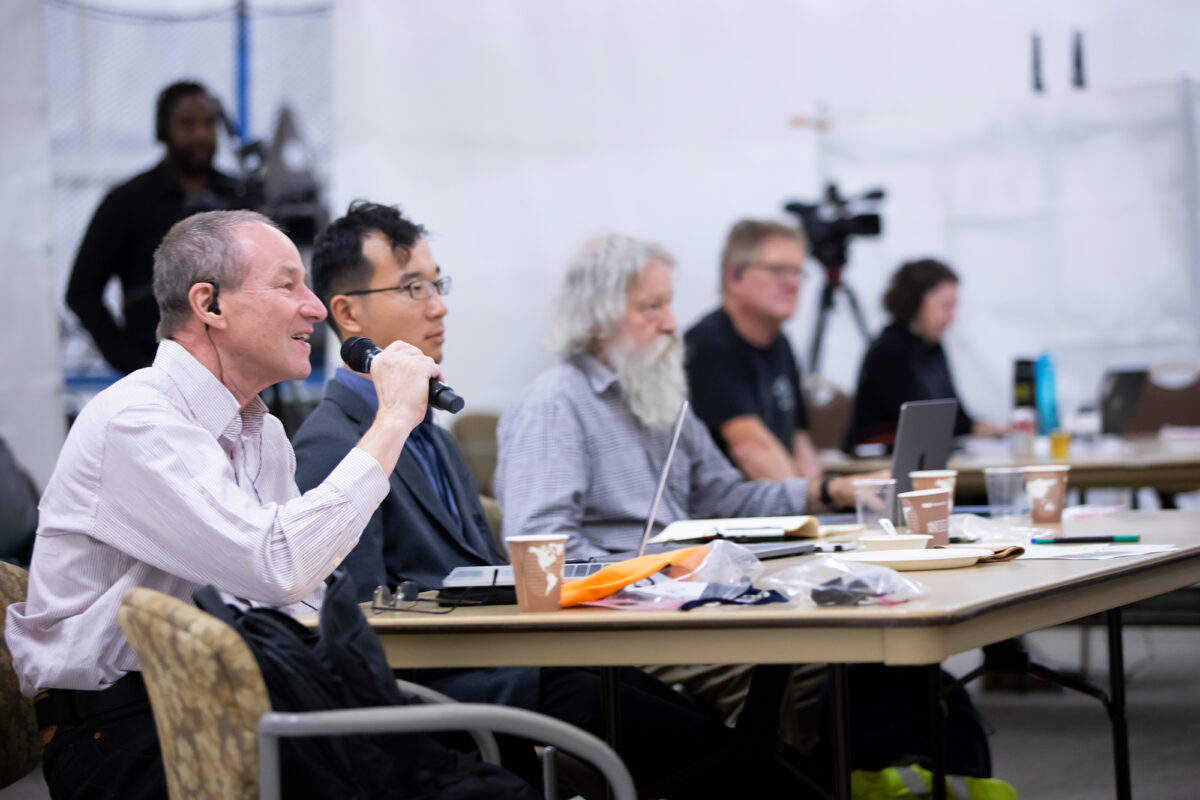
Jerry McManus with his former student, Yuxin Zhou, at the 2023 Comer Climate Conference. Photo by Jasmin Shah.
Multiplying mentors
It was about 25 years ago that McManus received that call from Gary Comer, and now, many of his own students are inspired to become mentors who champion others.
“I feel very strongly about mentorship. I greatly benefited from it,” Arellano said. “I want to become a good mentor, and seeing how Jerry does that is a great inspiration.”
Scientific research has been facing challenging times, and more than ever, McManus sees the value in mentorship and collaboration. He hopes, through his involvement with the Comer Family Foundation, to continue mentoring younger scientists and remind them in these difficult moments their work is valuable, that searching for answers that chip away at the climate problem is a noble endeavor.
Like a proud father of a large family, McManus considers his students his greatest pride and joy.
“I have just had the dumb good luck to work with brilliant and motivated students,” he said. “They have accomplished far more than I ever could have alone.”
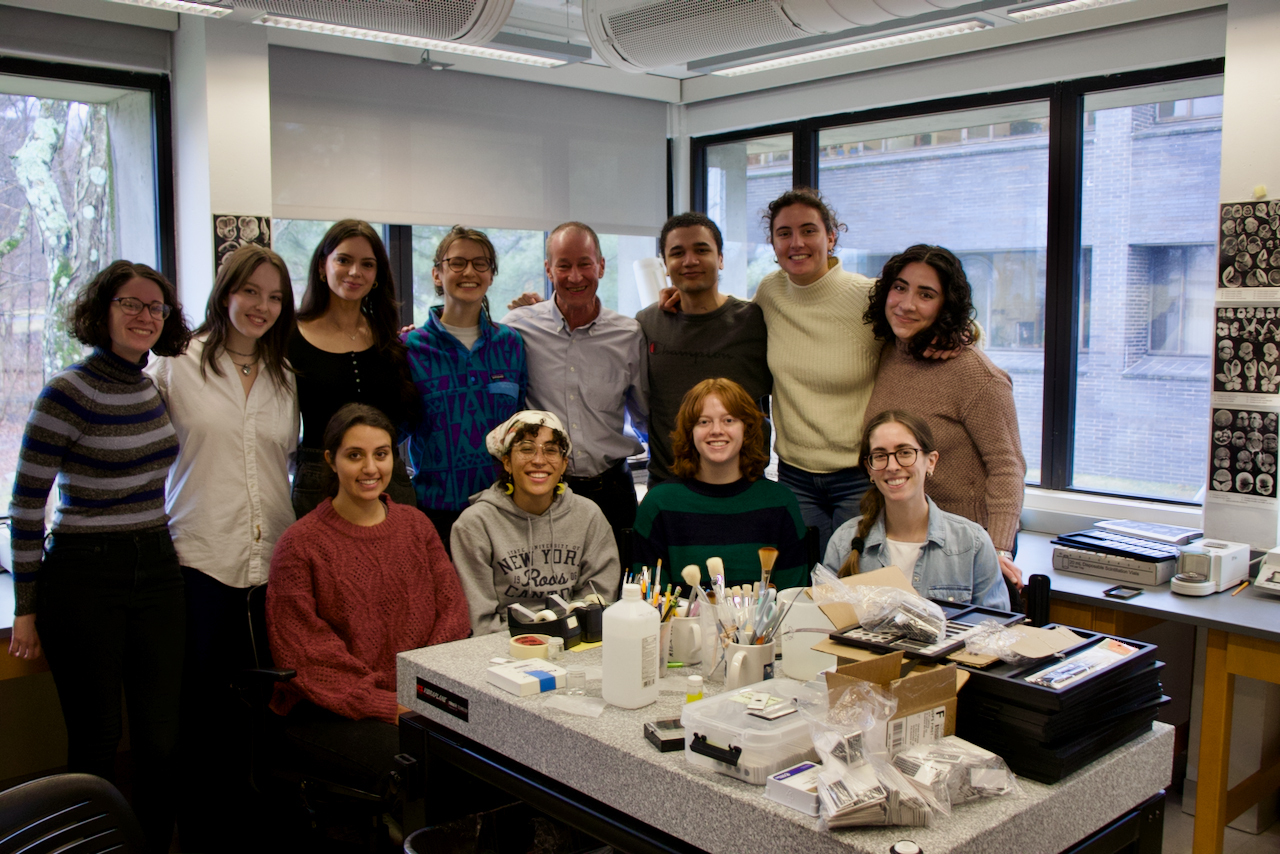
McManus research group in the sediment processing lab and microscope lab in the New Core Building at LDEO. In addition to three graduate students, most of the group were undergraduates. Two stayed on to work here, three went to grad school and Helen Latting (the tallest) is in Norway on a Fulbright award. From left to right in the back row: Korie DeBellis, Lexi Kaminski, Arjana Echupi, Lianna Pront, Jerry McManus, Michael DiJoseph, Helen Latting, Apollonia Arellano; From left to right in the front row: Radha Carollo, Alexia Pryor, Macy Matthews, Celeste Pallone. Photo courtesy of Celeste Pallone
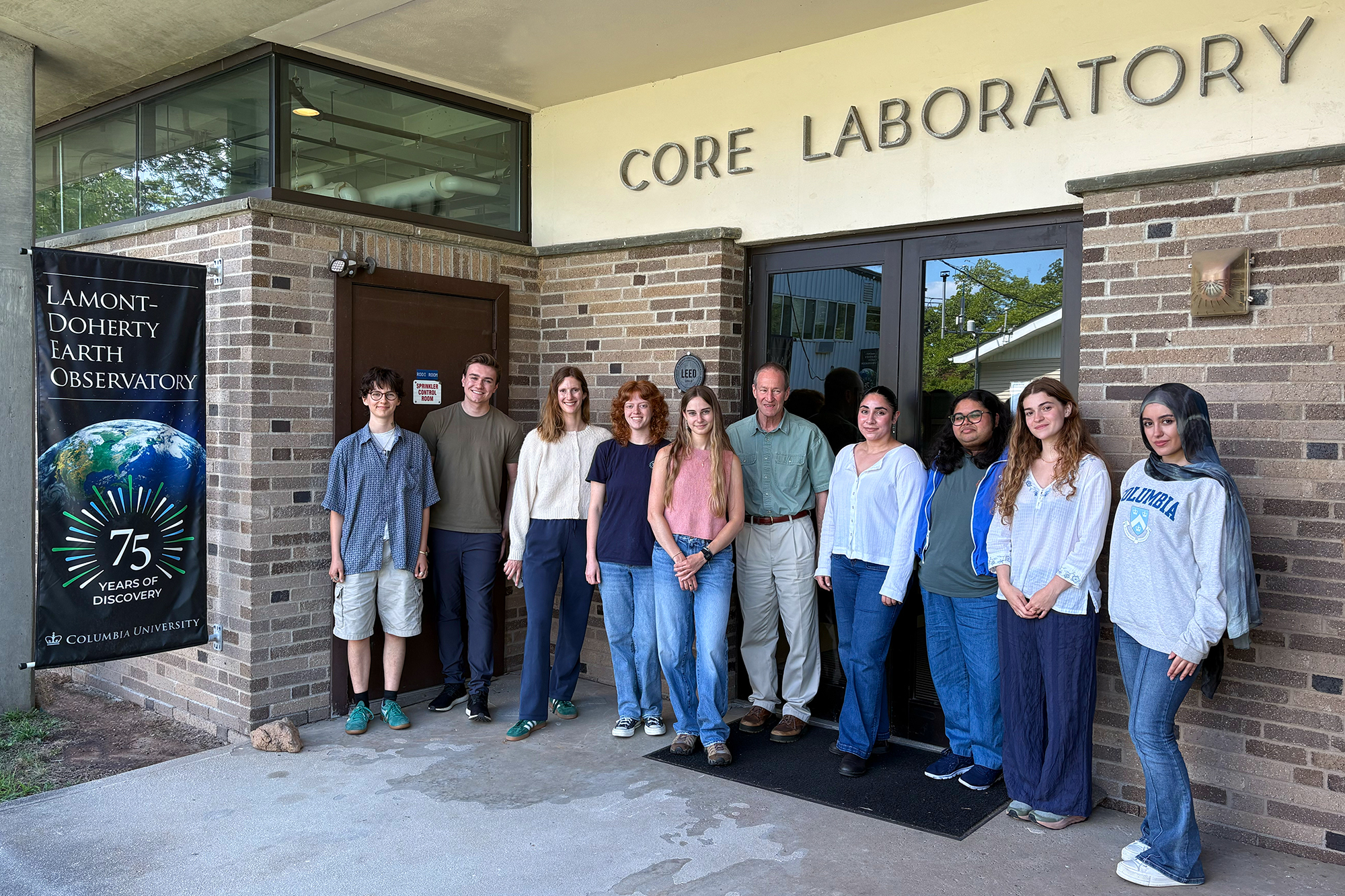
Jerry McManus with his current laboratory group at the Lamont-Doherty Core Repository. From left to right: Lianna Pront, Bradley Kelton, Claire Jasper, Macy Matthews, Gina Brown, Jerry McManus, Apollonia Arellano, Mimi Uddin, Abigail Sturley, B. Janset Aydogdu. Photograph courtesy of Apollonia Arellano.
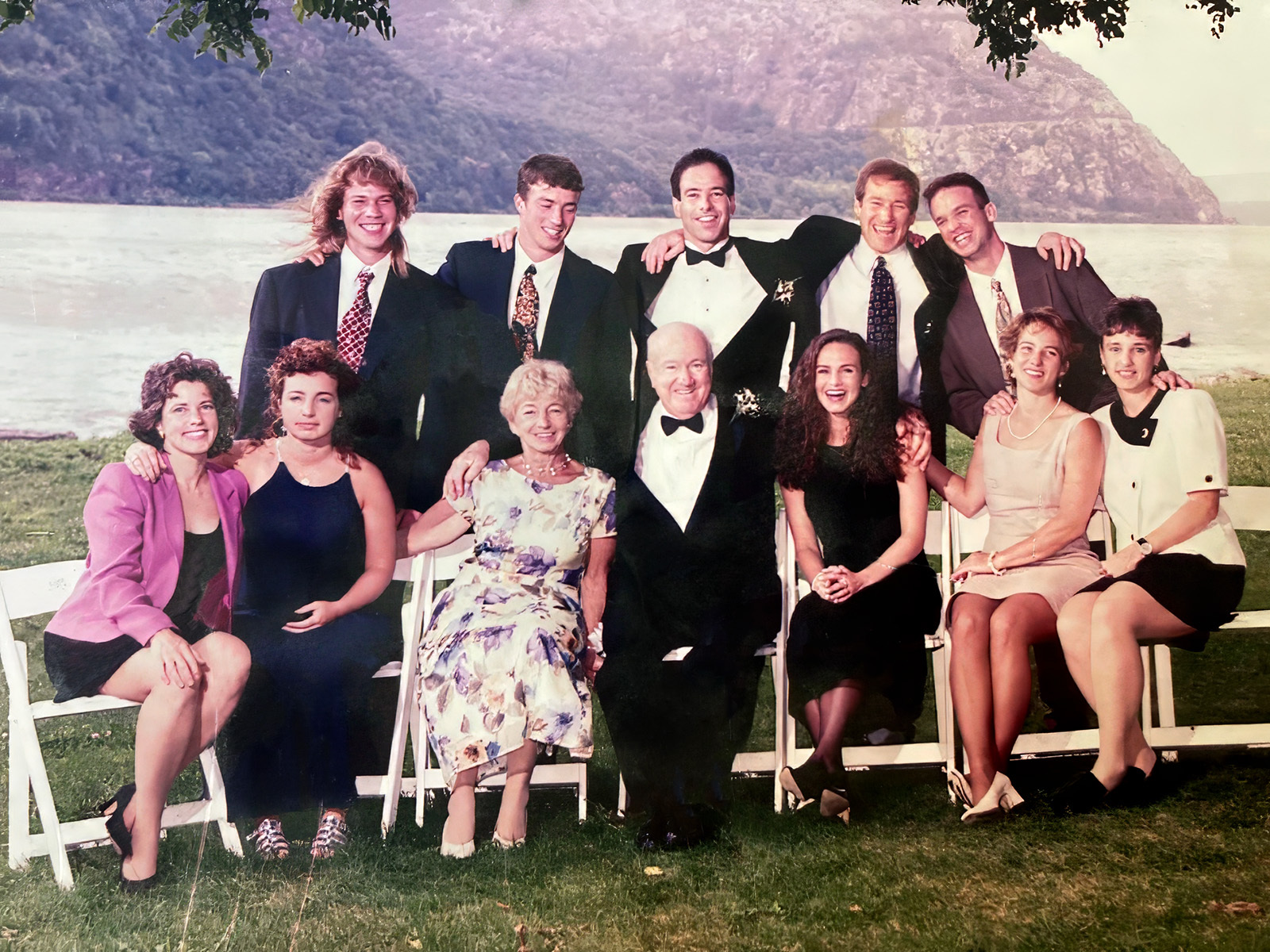
From left to right in the back row: Joseph, Christopher, Kevin, Jerry, Michael; From left to right in the front row: Mary Ellen, Eileen Margaret, Patricia Vanca McManus, Eugene, Gene Marie, Carol Ann, Patricia. Photograph courtesy of Jerry McManus.